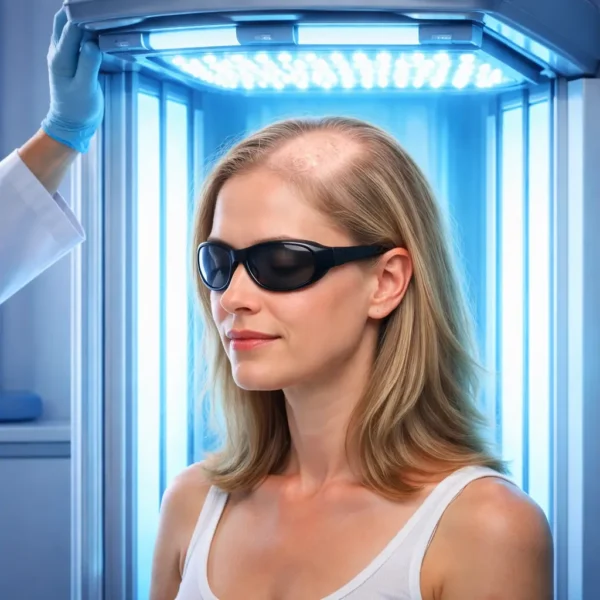
Alopecia areata (AA) is a complex autoimmune disorder, characterized by non-scarring hair loss. The etiology of AA is multifactorial, with genetic, immunological, and psychological factors, among others, thought to contribute. This review delves into the understanding of the primary initiation factors behind AA, including stress, trauma, genetics, infection, hormonal factors, allergies, exposure to chemicals, and seasonal changes.
Psychological stress, both chronic and sudden, is often linked to the onset of AA. Several studies have shown statistical correlations between stress events and AA onset. The interplay between stress and AA onset may hinge on the immune system; stress can stimulate the immune response, potentially instigating autoimmune reactions in predisposed individuals. However, retrospective studies often blur the line between stress as a trigger and stress as a result of AA, making definitive conclusions quite difficult.
Physical trauma, including local skin injuries, is another potential initiator of AA. A wealth of anecdotal evidence suggests that trauma can stimulate the immune system and precipitate AA with case reports published in the medical literature stretching back to the 1880s. The connection between trauma and autoimmune diseases is further supported by the involvement of heat shock proteins (HSPs) – proteins produced by cells under physical stress, which play a role in immune system responses and have been implicated in various autoimmune diseases.
The role of genetics in AA is undeniable. Evidence indicates a higher incidence of AA among genetically related individuals, suggesting a genetic predisposition. Furthermore, research has identified specific genes more common in AA patients, indicating a polygenic susceptibility to the disease. The onset, resistance to treatment, persistence, regression, and extent of AA might all be influenced by the interaction of these genes.
Infections, viral or bacterial, could potentially serve as triggers for AA. For instance, cytomegalovirus infection of hair follicles has been implicated in AA development in some past studies, although this is a contentious issue with other studies unable to find a link. HIV infection has been suggested as a potential trigger and there are several case reports of patients with HIV developing alopecia areata. One or two research publications also point to Epstein-Barr virus as a possible trigger for the onset of AA.
Hormonal fluctuations during life events such as pregnancy, puberty, and menopause may be associated with AA onset or remission. Temporary complete hair regrowth around childbirth in women with existing AA underlines the potential link between hormonal changes and AA. The specific mechanism by which hormones can influence the development of AA has been poorly researched. However, it is thought that estrogen hormones can stimulate immune activity while androgen / steroid type hormones can reduce immune responses.
The role of allergies and exposure to certain chemicals in AA onset cannot be disregarded. A correlation has been found between Caucasian individuals with atopy and a more severe course of AA. Furthermore, occupational exposure to certain chemicals, like acrylamide, has been linked to AA onset. More rcent studies from China show a strong link between allergies to house dust mites and the onset of AA.
Seasonal changes, surprisingly, also show some influence on the course of AA. Many patients report cyclical patterns of hair loss and regrowth in sync with the changing seasons. This might be due to changes in allergy responses through the year.
It is important to note that these factors do not operate in isolation. The interplay between genetic predisposition, immune response, and environmental triggers is crucial in the manifestation of AA. From some people, genetics might be a very strong influence, with the environment providing a small trigger to start the process of AA development. An initiating factor, like brief episode of stress or trauma, could be just enough tip the balance of the immune system towards autoimmunity, thus precipitating AA in a susceptible individual. For other people, genetics may not be involved, rather, the environment may play a very strong role, perhaps with several environmental triggers combining together to active the onset of disease. Once initiated, an autoimmune response can perpetuate the cycle of tissue destruction and antigen presentation, causing continued AA.
In conclusion, AA is a complex disorder with a diverse array of initiation factors. Understanding these factors can provide insights into the pathogenesis of AA and inform the development of therapeutic interventions. However, the challenge lies in untangling the interplay between these factors, which calls for more comprehensive, prospective, and carefully controlled studies. The initiation factors listed are largely based on case studies and retrospective analyses, and while these offer a wealth of information, they are not definitive due to inherent limitations such as recall bias and lack of control groups. Future research should aim to isolate and examine these factors more systematically, perhaps through longitudinal studies, and employ more rigorous scientific methodologies.
Wang E, McElwee KJ. Etiopathogenesis of alopecia areata: Why do our patients get it? Dermatol Ther. 2011;24(3):337–47.
1.
McElwee KJ, Gilhar A, Tobin DJ, Ramot Y, Sundberg JP, Nakamura M, et al. What causes alopecia areata? Exp Dermatol. 2013 Sept;22(9):609–26.
1.
Pratt CH, King LE, Messenger AG, Christiano AM, Sundberg JP. Alopecia areata. Nat Rev Dis Primers. 2017 Mar 16;3:17011.
1.
Bertolini M, McElwee K, Gilhar A, Bulfone-Paus S, Paus R. Hair follicle immune privilege and its collapse in alopecia areata. Exp Dermatol. 2020 Aug;29(8):703–25.
1.
Lintzeri DA, Constantinou A, Hillmann K, Ghoreschi K, Vogt A, Blume-Peytavi U. Alopecia areata - Current understanding and management. J Dtsch Dermatol Ges. 2022 Jan;20(1):59–90.
Introduction: Alopecia areata (AA) is an autoimmune disorder most often characterized by patchy hair loss that can significantly impact the quality of life for those…
Alopecia areata (AA) is driven by immune-mediated attack on the anagen hair follicle, with cytotoxic and helper T cells playing a central pathogenic role. While…
Manage Cookie Consent
We use technologies like cookies to store and/or access device information. We do this to improve browsing experience and to show (non-) personalized ads. Consenting to these technologies will allow us to process data such as browsing behavior or unique IDs on this site. Not consenting or withdrawing consent, may adversely affect certain features and functions.
Functional Always active
The technical storage or access is strictly necessary for the legitimate purpose of enabling the use of a specific service explicitly requested by the subscriber or user, or for the sole purpose of carrying out the transmission of a communication over an electronic communications network.
Preferences
The technical storage or access is necessary for the legitimate purpose of storing preferences that are not requested by the subscriber or user.
Statistics
The technical storage or access that is used exclusively for statistical purposes.The technical storage or access that is used exclusively for anonymous statistical purposes. Without a subpoena, voluntary compliance on the part of your Internet Service Provider, or additional records from a third party, information stored or retrieved for this purpose alone cannot usually be used to identify you.
Marketing
The technical storage or access is required to create user profiles to send advertising, or to track the user on a website or across several websites for similar marketing purposes.