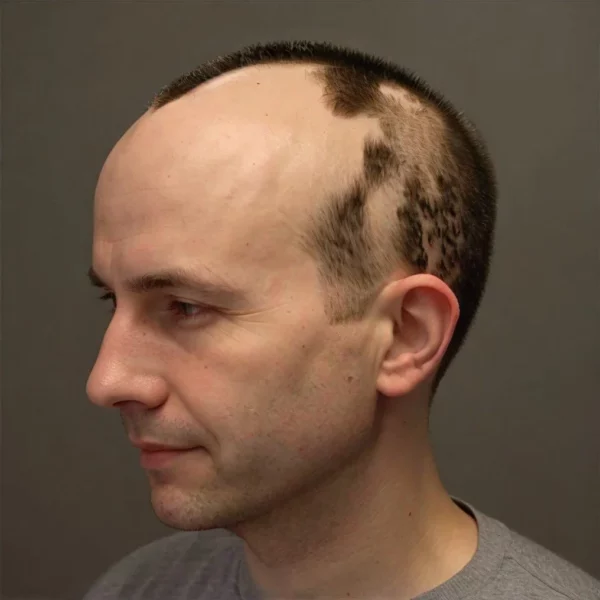
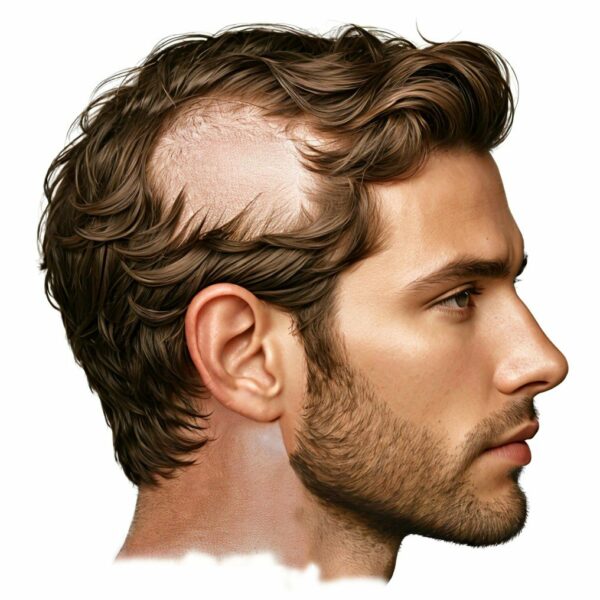
Alopecia areata (AA), an autoimmune condition targeting hair follicles, presents an intriguing deviation from this typical pattern of autoimmune tissue destruction. Unlike other autoimmune diseases, the hair follicles in AA are not entirely destroyed; instead, they are disrupted and can potentially fully recover under favorable conditions. Other autoimmune diseases often result in the destruction of the targeted tissues. For instance, type 1 diabetes involves the immune-mediated destruction of insulin-producing beta cells in the pancreas, leading to permanent loss of insulin production. Similarly, multiple sclerosis results from immune attacks on the myelin sheath covering nerve fibers, leading to irreversible damage. This article delves into the reasons behind this apparent failure of tissue destruction in AA, examining the pathological and immunological intricacies involved.
Pathophysiology of Alopecia Areata: Alopecia areata is characterized by non-scarring hair loss, which primarily affects the scalp, but can also involve other hair-bearing areas of the body. In the early stages of AA development, histological examination of affected skin often reveals active, yet dystrophic, hair follicles in the anagen (growth) phase. These follicles produce root sheath material and hair fibers that are too small and aberrant to penetrate the skin surface. The hallmark of AA is the presence of white blood cells, particularly T lymphocytes, clustering around the hair follicle bulb, indicative of an immune-mediated attack.
However, unlike in other autoimmune conditions where the immune response leads to complete tissue destruction, the hair follicles in AA remain structurally intact and retain the potential for regeneration. This preservation of the hair follicle structure suggests a unique mechanism of immune-mediated disruption rather than outright tissue destruction. There seem to be several features of the immune mechanism in AA that allow the hair follicles to survive, albeit in a much damaged state.
Immunological Mechanisms: The immune system’s involvement in AA is evident, yet the precise mechanisms remain a topic of ongoing research. One hypothesis posits that the immune response in AA is directed not against the hair follicle tissue itself, but against regulatory mechanisms controlling hair growth. This theory suggests that immune cells may interfere with signals essential for maintaining the hair follicle in the anagen phase, thus inhibiting hair production without destroying the follicle. Cytokines, which are chemical signals produced by immune cells and hair follicles, may play a crucial role in this process. Certain cytokines could disrupt the normal functioning of hair follicles, leading to the observed hair loss without causing permanent damage to the follicle structure. Certainly, some cytokines have been shown to be present in inflammatory cell infiltrates in AA, such as interleukin 6, which is well known as an inhibitor of hair growth.
Cyclic Nature of Hair Follicles: Alopecia areata’s distinctive feature is its non-scarring nature, which contrasts sharply with the tissue destruction observed in other autoimmune diseases. One explanation for this difference is the hair follicle’s unique cyclic nature. Hair follicles undergo cyclic phases of growth (anagen), regression (catagen), and rest (telogen). This cyclic activity might help protect hair follicles from permanent destruction. Essentially, hair follicles are able to avoid being targeted by the immune system by switching into a different phase of cycle activity.
In AA, it has been suggested that hair follicles may prematurely transition from the anagen phase to the telogen phase. During telogen, hair follicles express fewer antigens, potentially reducing antigenic stimulation of immune cells. As a result, the immune cells disperse, leading to a reduction in immune-mediated damage – telogen stage hair follicles are largely ignored by the immune system. Interestingly, while the early stages of AA development are usually characterized by hair follicles in a dystrophic anagen state, in people with AA that has persisted for several years, most of their hair follicles stay dormant in a prolonged telogen state. If hair follicles attempt to return to the anagen phase, immune cells reappear and attack the hair follicles again. The cyclic nature of hair growth ensures that the follicles are not continuously subjected to immune attack, thereby avoiding total tissue destruction.
Failure to Activate Scar Tissue Formation: One of the critical distinctions between alopecia areata (AA) and other autoimmune diseases is the failure to activate scar tissue formation in the affected hair follicles. This lack of fibrosis is a significant factor contributing to the non-destructive nature of AA and contrasts sharply with the fibrotic response observed in many other autoimmune conditions.
In many autoimmune diseases, the immune system’s attack leads to chronic inflammation, which triggers the formation of scar tissue or fibrosis. For example, in systemic sclerosis (scleroderma), the autoimmune response results in widespread fibrosis of the skin and internal organs. Similarly, in autoimmune hepatitis, the liver undergoes progressive scarring due to persistent immune-mediated inflammation. Fibrosis is generally the body’s way of repairing tissue damage, but in autoimmune diseases, it often results in the permanent loss of tissue function and structure.
In AA, despite the presence of an active immune response around hair follicles, there is a conspicuous absence of fibrosis. Histological examinations of AA-affected skin show inflammatory infiltrates, primarily composed of T lymphocytes, around the hair follicle bulb. However, there is no evidence of the collagen deposition and tissue remodeling that characterize fibrotic processes. This absence of scarring indicates that the immune response in AA, while disruptive, does not initiate the pathways leading to permanent tissue damage and fibrosis.
Targeting Differences between Alopecia Areata and Scarring Alopecia: One of the critical distinctions between alopecia areata (AA) and scarring alopecia lies in the specific regions of the hair follicle targeted by the immune cells. In AA, the immune cells predominantly target the hair bulb, the lower part of the hair follicle where active hair growth occurs. This area is responsible for producing the hair shaft and its surrounding root sheath. While the cells in this area are important for making hair fiber, the primary source of hair making cells comes from stem cells – and these cells live in the bulge region of the hair follicle which is quite some distance away from any bulb inflammation.
Scarring alopecia, also known as cicatricial alopecia, involves an immune attack on the bulge region of the hair follicle. The bulge region houses hair follicle stem cells, which are crucial for the regeneration and cycling of hair follicles. If these stem cells are destroyed, the hair follicle loses its ability to regenerate, leading to permanent hair loss and the formation of scar tissue. The destruction of the bulge region and its stem cells in scarring alopecia results in irreversible damage, distinguishing it from the non-scarring and potentially reversible nature of AA. It seems that in AA, the stem cells in the bulge region are not affected and they remain ready to regenerate the hair follicle once the inflammation subsides or is suppressed by treatment.
Hair Follicle Immune Privilege and Its Role in Preventing Total Tissue Destruction: Hair follicles possess a unique characteristic known as immune privilege, a localized state where immune responses are modulated to protect crucial tissues from immune-mediated damage. This concept is well-documented in several body sites, such as the eyes, which similarly require protection from immune system attacks to preserve their essential functions. Immune privilege in hair follicles is maintained through several mechanisms including the expression of immunosuppressive factors, such as transforming growth factor-beta (TGF-β) and alpha-melanocyte-stimulating hormone (α-MSH). In AA, the immune privilege functions of hair follicles either become defective, or are overwhelmed by the autoimmune inflammatory cells.However, even with this breakdown, the residual immune privilege functioning in the damaged hair follicles may still help to contain the damage to a reversible state. The remaining immunosuppressive environment within the follicle might partially mitigate the severity of the immune response, preventing the progression to irreversible tissue destruction and fibrosis. Understanding and enhancing these protective mechanisms could pave the way for novel therapeutic approaches to manage and potentially reverse AA.
Potential Role of Antigen Presentation: Another intriguing aspect of AA is the potential role of transient antigen presentation. It has been proposed that the antigen targeted by the immune system in AA may be present or exposed only briefly at the onset of the condition. Once this initial phase passes, the original AA inciting antigen might no longer be presented, reducing the stimulus for ongoing immune attack. This hypothesis aligns with observations that hair follicles can recover and regrow hair once the immune response diminishes. An imbalance in the immune system, perpetuated by factors such as cytokines or T regulatory cells, might sustain AA even after the initial antigen exposure has ceased.
Multiple Mechanisms at Play: The complexity of AA suggests that multiple mechanisms could contribute to the preservation of hair follicles despite the immune-mediated disruption. These mechanisms may include a combination of reduced antigen presentation during telogen, immune modulation by cytokines, and the cyclic nature of hair follicle activity. Furthermore, genetic and environmental factors likely play roles in modulating the immune response and influencing the course of AA over time.
Conclusion: The phenomenon of hair follicle preservation in alopecia areata, despite immune system activity, offers a fascinating deviation from the classic model of autoimmune tissue destruction. The unique characteristics of hair follicles, including their cyclic nature and potential for regeneration, contribute to this divergence. While the precise mechanisms underlying AA remain to be fully elucidated, current hypotheses emphasize the roles of regulatory immune responses, cytokine activity, and transient antigen presentation. Continued research into these mechanisms holds promise for developing targeted therapies that can modulate the immune response and promote hair regrowth in individuals affected by alopecia areata.
Understanding the intricacies of AA not only sheds light on this specific condition but also provides valuable insights into the broader field of autoimmune diseases. By unraveling the factors that allow for tissue preservation in AA, researchers might uncover new strategies for managing and treating other autoimmune disorders characterized by tissue destruction.
Messenger AG. Alopecia Areata. In: Verbov JL, editor. Talking Points in Dermatology - III. Dordrecht: Springer Netherlands; 1988. p. 1–27.
1.
Tobin DJ, Fenton DA, Kendall MD. Ultrastructural observations on the hair bulb melanocytes and melanosomes in acute alopecia areata. J Invest Dermatol. 1990 June;94(6):803–7.
1.
Wang E, McElwee KJ. Etiopathogenesis of alopecia areata: Why do our patients get it? Dermatol Ther. 2011;24(3):337–47.
1.
Zhang B, Zhao Y, Cai Z, Caulloo S, McElwee KJ, Li Y, et al. Early stage alopecia areata is associated with inflammation in the upper dermis and damage to the hair follicle infundibulum. Australas J Dermatol. 2013 Aug;54(3):184–91.
1.
McElwee KJ, Gilhar A, Tobin DJ, Ramot Y, Sundberg JP, Nakamura M, et al. What causes alopecia areata? Exp Dermatol. 2013 Sept;22(9):609–26.
1.
Bertolini M, McElwee K, Gilhar A, Bulfone-Paus S, Paus R. Hair follicle immune privilege and its collapse in alopecia areata. Exp Dermatol. 2020 Aug;29(8):703–25.
Alopecia Areata (AA), a condition characterized by hair loss, has been a challenge for humans throughout history. This essay presents a brief tour of the…
In the annals of medical history, particularly within the rich tapestry of ancient Chinese culture, the condition we now recognize as alopecia areata was once…
Alopecia areata (AA) is an autoimmune condition characterized by the sudden loss of hair on the scalp and sometimes other parts of the body. It…
Manage Cookie Consent
We use technologies like cookies to store and/or access device information. We do this to improve browsing experience and to show (non-) personalized ads. Consenting to these technologies will allow us to process data such as browsing behavior or unique IDs on this site. Not consenting or withdrawing consent, may adversely affect certain features and functions.
Functional Always active
The technical storage or access is strictly necessary for the legitimate purpose of enabling the use of a specific service explicitly requested by the subscriber or user, or for the sole purpose of carrying out the transmission of a communication over an electronic communications network.
Preferences
The technical storage or access is necessary for the legitimate purpose of storing preferences that are not requested by the subscriber or user.
Statistics
The technical storage or access that is used exclusively for statistical purposes.The technical storage or access that is used exclusively for anonymous statistical purposes. Without a subpoena, voluntary compliance on the part of your Internet Service Provider, or additional records from a third party, information stored or retrieved for this purpose alone cannot usually be used to identify you.
Marketing
The technical storage or access is required to create user profiles to send advertising, or to track the user on a website or across several websites for similar marketing purposes.