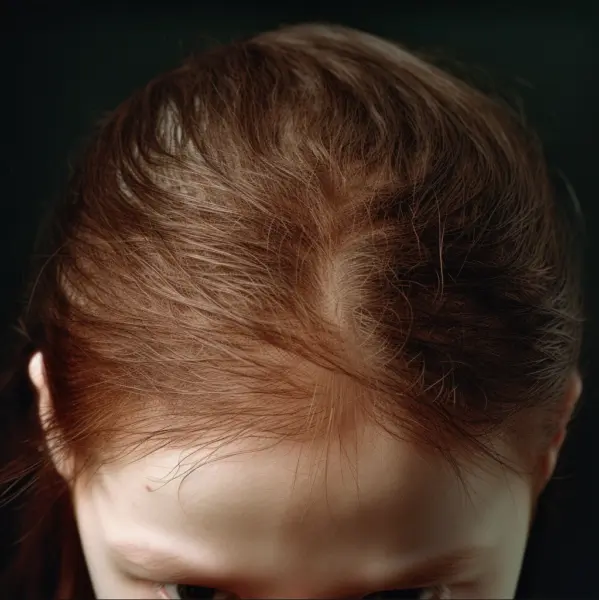
Trichotillomania (TTM), also known as hair-pulling disorder, is a condition that compels people to pull out their hair. This behavior can result in significant hair loss and emotional distress, often leading to social avoidance and attempts to hide the issue with hats, wigs, and hairstyles to cover affected areas of scalp.
The term ‘trichotillomania’ was first coined in the later part of the 18th century, and the condition was originally described in ancient Greece according to medical textbooks from the period. The lifetime prevalence of TTM has been reported as high as 3.5%. However, most studies suggest trichotillomania affects 1-2% of all adults and adolescents. The disorder can affect both children and adults, and most commonly it first emerges around the age of 13. While both boys and girls may experience trichotillomania in childhood, the adult manifestation of the disorder predominantly affects women.
Individuals with trichotillomania often unconsciously pull their hair and may be unaware of their behavior until presented with physical evidence. Sometimes it can involve video footage of the hair plucking event, often taken by friends and family members, before the individual realizes and accepts that they have trichotillomania.
People with trichotillomania may pull hair from any part of their body. Studies have identified the scalp as being the most commonly affected area. Approximately 70% of trichotillomania cases involve scalp hair loss, 50% involve eyebrows and or eyelashes, 30% include pubic hair, 20% body hair, and about 10% involve facial hair. The intensity varies from person to person, with some pulling out handfuls of hair and others targeting one strand at a time. Around 20% of individuals eat their hair after pulling it out, a behavior known as trichophagia, which can lead to gastrointestinal hairballs (trichobezoars) that can require surgical intervention.
Trichotillomania is considered a neurobiological condition, often developing in individuals with anxiety disorders or mood problems. Interestingly, it’s not exclusive to humans. Animals, including mice and parrots, have been observed to exhibit similar hair-pulling behaviors under stressful conditions, a behavior known in mice as ‘barbering’. Certain mouse strains are more prone to barbering than others, suggesting a genetic component to this condition.
The treatment approaches for trichotillomania vary, often depending on whether a psychiatrist or dermatologist is providing the care. Psychiatrists tend to focus on the psychological aspects of the disorder, exploring potential underlying issues that may have led to the development of the hair-pulling habit. Therapy and medication are common treatment options. Dermatologists, on the other hand, offer more direct interventions aimed at inhibiting the physical act of hair pulling. For example, they may recommend that a child wear gloves to prevent tactile identification of hairs to pull, or they may suggest applying vaseline to the hair to make it difficult to grasp.
The prognosis for children with trichotillomania is generally positive, with many outgrowing the condition with appropriate treatment. However, it’s crucial to seek successful treatment early on because continuous hair pulling over several years can lead to permanent damage to the hair follicles. This can result in hair not growing back properly or at all, a condition known as traumatic or traction alopecia. Unfortunately, adults who develop trichotillomania typically have a poorer prognosis and are less likely to respond to treatment.
In conclusion, trichotillomania is a complex disorder with multifaceted implications. It is not merely an issue of cosmetic concern, but a mental health disorder that can significantly affect a person’s quality of life. Despite its prevalence, it is often misunderstood or misdiagnosed, which can delay the administration of appropriate treatment. Increased awareness, understanding, and research are essential for improved diagnosis, treatment, and support for those living with trichotillomania. With the right approach, we can hope to significantly improve the prognosis for those affected and ultimately reduce the prevalence of this challenging condition.
Delgado RA, Mannino FV. Some observations on trichotillomania in children. J Am Acad Child Psychiatry. 1969 Apr;8(2):229–46.
1.
Mansueto CS, Stemberger RM, Thomas AM, Golomb RG. Trichotillomania: a comprehensive behavioral model. Clin Psychol Rev. 1997;17(5):567–77.
1.
Sah DE, Koo J, Price VH. Trichotillomania. Dermatol Ther. 2008;21(1):13–21.
1.
Neal-Barnett A, Statom D, Stadulis R. Trichotillomania symptoms in African American women: are they related to anxiety and culture? CNS Neurosci Ther. 2011 Aug;17(4):207–13.
1.
Grant JE, Chamberlain SR. Trichotillomania. Am J Psychiatry. 2016 Sept 1;173(9):868–74.
1.
Melo DF, Lima CDS, Piraccini BM, Tosti A. Trichotillomania: What Do We Know So Far? Skin Appendage Disord. 2022 Jan;8(1):1–7.
Traction Alopecia (TA) is a common form of hair loss globally, though the prevalence varies significantly across different regions, populations, and cultural contexts. It is…
Why are dermal fillers suddenly linked to hair loss: Soft‑tissue fillers – particularly hyaluronic‑acid (HA) gels – have become a mainstay of minimally invasive cosmetic…
A quiet form of hair loss: When people think of balding, they usually picture the familiar recessions and crowns of androgenetic alopecia (“male‑” or “female‑pattern”…
Manage Cookie Consent
We use technologies like cookies to store and/or access device information. We do this to improve browsing experience and to show (non-) personalized ads. Consenting to these technologies will allow us to process data such as browsing behavior or unique IDs on this site. Not consenting or withdrawing consent, may adversely affect certain features and functions.
Functional Always active
The technical storage or access is strictly necessary for the legitimate purpose of enabling the use of a specific service explicitly requested by the subscriber or user, or for the sole purpose of carrying out the transmission of a communication over an electronic communications network.
Preferences
The technical storage or access is necessary for the legitimate purpose of storing preferences that are not requested by the subscriber or user.
Statistics
The technical storage or access that is used exclusively for statistical purposes.The technical storage or access that is used exclusively for anonymous statistical purposes. Without a subpoena, voluntary compliance on the part of your Internet Service Provider, or additional records from a third party, information stored or retrieved for this purpose alone cannot usually be used to identify you.
Marketing
The technical storage or access is required to create user profiles to send advertising, or to track the user on a website or across several websites for similar marketing purposes.