Evaluating how cosmetic products influence hair breakage is a cornerstone of modern hair-science research and product development. Consumers judge hair quality largely through tactile experience: whether hair feels strong, resists breakage when brushed, or maintains its integrity after chemical or thermal styling. Yet translating those everyday observations into standardized, reproducible laboratory measurements requires a diverse suite of testing methods. These methods range from classical mechanical assays performed on single fibers to more complex simulations of grooming, environmental exposure, and cumulative fatigue.
This overview synthesizes the major approaches used by cosmetic scientists, formulators, and test laboratories to assess whether a product genuinely reduces breakage or strengthens hair. The goal is conceptual clarity rather than methodological depth, highlighting how each technique contributes to the overall understanding of hair integrity.
Understanding the nature of hair breakage: Hair breakage occurs when the structural resilience of the fiber can no longer withstand mechanical stress. Breakage may be immediate, caused by a sudden strong force, or progressive, caused by the accumulation of microscopic fatigue damage. Tensile strength is important, but daily grooming rarely involves extreme forces. Instead, most real-world breakage arises through repeated low-to-moderate stresses: brushing, combing, friction between fibers, towel drying, or bending while styling. Chemical treatments such as bleaching and relaxing weaken the cuticle and cortex, amplifying susceptibility.
Effective product testing, therefore, requires tools that capture both intrinsic mechanical strength and practical resistance to breakage during routine use. Modern cosmetic science relies on multiple complementary methods to obtain that holistic picture.
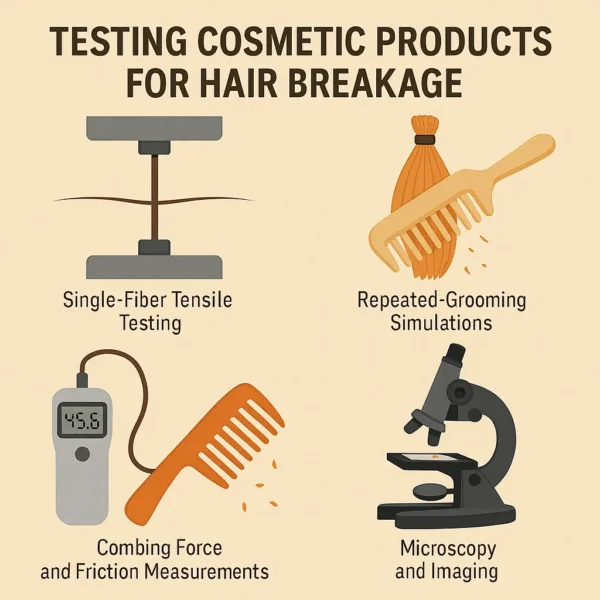
Single-fiber tensile testing: establishing baseline strength: Single-fiber tensile testing is one of the longest-standing methods for assessing hair strength. A single strand of hair is clamped between two grips and pulled at a controlled speed until it breaks. The instrument records force and extension, generating a stress–strain curve. From this curve, researchers derive metrics such as:
Young’s modulus , indicating stiffnessBreak stress , indicating the force at which the fiber failsBreak strain , indicating how much the fiber elongates before failure These measurements reveal intrinsic mechanical properties of the cortex, the region of the hair fiber responsible for strength and elasticity.
Tensile data are particularly useful for evaluating chemical treatments that alter keratin cross-linking or protein structure, such as bleaching, perming, or oxidative coloring. Products marketed as “reconstructors” or “bond builders” often support their claims by demonstrating increases in break stress or stiffness after treatment.
However, tensile testing has limitations. It captures catastrophic failure under a single extreme force event. Most consumers, though, experience breakage as cumulative damage from repeated forces far below those used in tensile assays. This gap between laboratory failure modes and real-life grooming behaviors motivates the need for additional test paradigms.
Fatigue testing: modeling cumulative damage: Fatigue testing seeks to approximate the repeated stresses hair experiences in everyday grooming. Instead of pulling a hair until it breaks in one event, fatigue methods expose fibers to thousands of smaller stress cycles. These cycles may involve bending, stretching, or a combination of mechanical motions designed to replicate brushing or manipulation.
The key metric is the number of cycles until failure. Even if a fiber shows adequate tensile strength, it may break quickly under fatigue conditions if the cuticle is eroded or microcracks exist within the cortex.
Fatigue testing reflects two important realities:
Real-world breakage results from repeated damage accumulation. Surface properties, such as lubrication and friction, strongly influence breakage risk. Conditioners, smoothing serums, and leave-in treatments often perform particularly well in fatigue tests because they reduce inter-fiber friction and mechanical stress during grooming.
Fatigue testing is more time-consuming than tensile testing, but it provides richer insight into how hair behaves under consumer-relevant conditions.
Repeated-grooming simulations: approximating everyday use: To bridge the gap between laboratory mechanics and consumer experience, test laboratories frequently use automated repeated-grooming simulators. These devices hold multiple tresses and subject them to controlled brushing or combing cycles. Broken hairs fall onto collection plates or are captured in filters and then counted.
Repeated-grooming tests allow researchers to compare product performance at the tress level, incorporating variables such as:
Friction and lubrication Cuticle integrity Tangle formation Fiber-on-fiber interactions Resistance to dynamic bending and torsion Because the method closely resembles how consumers use the product, the results translate well into claims such as “reduces breakage by X percent” or “improves manageability.” It is also one of the most effective ways to differentiate rinse-off conditioners, masks, leave-ins, and anti-breakage serums.
However, grooming simulations can still oversimplify real-life conditions. They typically use standard combs, constant speed, and uniform tension, whereas consumer behavior varies widely. Even so, they remain among the most relevant large-scale tests available.
Combing-force and friction measurements: quantifying manageability: Breakage is strongly influenced by how easily hairs pass over each other during grooming. High friction increases shear forces on the cuticle, accelerates damage, and raises the likelihood of fiber fracture. Cosmetic scientists therefore measure two related parameters:
Wet and dry combing force Coefficient of friction These measurements do not directly quantify breakage, but they capture mechanisms by which products prevent breakage. As a result, they often serve as secondary evidence supporting broader mechanical tests.
Microscopy and imaging – visualizing structural change: Understanding breakage also requires visual assessment of the fiber structure. Researchers use various microscopy techniques to examine:
Cuticle edge lifting Erosion or chipping Crack formation in the cortex Bubble hair, split ends, and fibrillation Deposition of conditioning agents Tools include light microscopy, scanning electron microscopy (SEM), confocal imaging, and sometimes micro-computed tomography (micro-CT). These methods do not quantify breakage but provide context for interpreting mechanical results and assessing the mechanisms through which a product acts.
For example, SEM imaging after bleaching shows characteristic cuticle wear that correlates with reduced tensile strength and faster fatigue failure. Treatment with conditioning polymers may visibly coat the cuticle surface, smoothing edges and reducing friction during brushing.
Porosity and water uptake – assessing the hair’s internal integrity: Hair porosity indicates how easily water penetrates the fiber. Damaged hair tends to have higher porosity because chemical or mechanical insults create pathways for moisture entry. Increased porosity often correlates with weakened mechanical strength.
Laboratories measure porosity through:
Water uptake kinetics Swelling assays Sorption analysis Dye uptake tests These methods are useful for screening damage levels or monitoring improvements after treatment. Products that claim to “repair the hair fiber” or “seal the cuticle” often support such claims with porosity measurements.
Advances in small-scale mechanical and structural testing: Beyond classical methods, research-driven laboratories employ sophisticated techniques that deepen understanding of how products affect the hair’s molecular and microstructural integrity.
Examples include:
Nanoindentation , which measures local hardness and elasticity within the cortexDynamic mechanical analysis , characterizing viscoelastic behaviorThermal assays such as DSC , revealing changes in keratin denaturation temperatureSpectroscopy (FTIR, Raman) to track chemical changes in protein or lipid components These methods help determine whether a product modifies the internal keratin architecture or primarily affects surface properties. They are less commonly used for routine product claims but are critical in research, innovation, and development of new actives.
Integrating methods to build a complete picture: No single test provides a full understanding of hair breakage or product efficacy. Cosmetic labs therefore build test batteries combining:
Tensile testing for intrinsic strength Fatigue testing for durability Repeated-grooming simulations for real-world relevance Friction and combing tests for manageability and mechanical load reduction Microscopy for structural assessment Porosity or water uptake for internal integrity The integration of these datasets allows formulators to distinguish between:
Products that strengthen the fiber Products that reduce mechanical stress Products that improve surface lubrication or cuticle condition Products that temporarily reinforce damaged regions through deposition This differentiation is critical for product positioning and accurate claim substantiation.
Conclusion: Testing cosmetic products for their effects on hair breakage requires a multidimensional approach. While tensile testing remains foundational, it is insufficient alone because most breakage in everyday life results from cumulative fatigue, friction, and grooming stresses. Modern evaluations therefore employ a constellation of methods, from controlled fatigue paradigms and combing simulations to advanced imaging and porosity measurements.
Together, these methods generate a nuanced, realistic understanding of how products influence hair strength and resilience. For formulators and researchers, this integrated approach ensures that product claims reflect measurable, reproducible improvements in hair integrity. For consumers, it means that terms like “strengthens hair,” “reduces breakage,” or “improves manageability” have a solid scientific basis grounded in rigorous mechanical and structural evaluation.
Bibliography
11711645 {11711645:5PB2XJBU},{11711645:7SZT8VZA},{11711645:CJAJLTMS},{11711645:TEPWWV8H},{11711645:GYMQVSI7},{11711645:VYQLGNQ7},{11711645:BKGSV4C9},{11711645:2P93DY3Y},{11711645:RH4RKTS3},{11711645:2G6PK8SR},{11711645:XXMAITD7},{11711645:D2BZUVWP},{11711645:44XHRZHF} 1 vancouver 50 date asc 2025 https://www.keratin.com/wp-content/plugins/zotpress/ %7B%22status%22%3A%22success%22%2C%22updateneeded%22%3Afalse%2C%22instance%22%3Afalse%2C%22meta%22%3A%7B%22request_last%22%3A0%2C%22request_next%22%3A0%2C%22used_cache%22%3Atrue%7D%2C%22data%22%3A%5B%7B%22key%22%3A%2244XHRZHF%22%2C%22library%22%3A%7B%22id%22%3A11711645%7D%2C%22meta%22%3A%7B%22creatorSummary%22%3A%22Evans%22%2C%22parsedDate%22%3A%222013%22%2C%22numChildren%22%3A0%7D%2C%22bib%22%3A%22%26lt%3Bdiv%20class%3D%26quot%3Bcsl-bib-body%26quot%3B%20style%3D%26quot%3Bline-height%3A%201.35%3B%20%26quot%3B%26gt%3B%5Cn%20%20%26lt%3Bdiv%20class%3D%26quot%3Bcsl-entry%26quot%3B%20style%3D%26quot%3Bclear%3A%20left%3B%20%26quot%3B%26gt%3B%5Cn%20%20%20%20%26lt%3Bdiv%20class%3D%26quot%3Bcsl-left-margin%26quot%3B%20style%3D%26quot%3Bfloat%3A%20left%3B%20padding-right%3A%200.5em%3B%20text-align%3A%20right%3B%20width%3A%201em%3B%26quot%3B%26gt%3B1.%26lt%3B%5C%2Fdiv%26gt%3B%26lt%3Bdiv%20class%3D%26quot%3Bcsl-right-inline%26quot%3B%20style%3D%26quot%3Bmargin%3A%200%20.4em%200%201.5em%3B%26quot%3B%26gt%3BEvans%20T.%20Measuring%20Hair%20Strength%2C%20Part%20I%3A%20Stress-Strain%20Curves.%20Cosmetics%20%26amp%3B%20Toiletries.%202013%3B128%288%29%3A590%26%23x2013%3B4.%26lt%3B%5C%2Fdiv%26gt%3B%5Cn%20%20%20%26lt%3B%5C%2Fdiv%26gt%3B%5Cn%26lt%3B%5C%2Fdiv%26gt%3B%22%2C%22data%22%3A%7B%22itemType%22%3A%22journalArticle%22%2C%22title%22%3A%22Measuring%20Hair%20Strength%2C%20Part%20I%3A%20Stress-Strain%20Curves%22%2C%22creators%22%3A%5B%7B%22creatorType%22%3A%22author%22%2C%22firstName%22%3A%22TA%22%2C%22lastName%22%3A%22Evans%22%7D%5D%2C%22abstractNote%22%3A%22This%20article%20is%20the%20first%20in%20a%20series%20that%20will%20address%20the%20approaches%20of%20measuring%20the%20%5Cu201cstrength%5Cu201d%20of%20hair%20and%20quantifying%20the%20manner%20by%20which%20this%20property%20may%20be%20altered.%20Specifically%2C%20it%20will%20begin%20with%20the%20generation%20of%20stress-strain%20curves%20through%20the%20use%20of%20constant%20rate%20extension%20experiments.%22%2C%22date%22%3A%222013%22%2C%22section%22%3A%22%22%2C%22partNumber%22%3A%22%22%2C%22partTitle%22%3A%22%22%2C%22DOI%22%3A%22%22%2C%22citationKey%22%3A%22%22%2C%22url%22%3A%22%22%2C%22PMID%22%3A%22%22%2C%22PMCID%22%3A%22%22%2C%22ISSN%22%3A%22%22%2C%22language%22%3A%22en-us%22%2C%22collections%22%3A%5B%22TVE646NS%22%5D%2C%22dateModified%22%3A%222025-12-07T16%3A20%3A55Z%22%7D%7D%2C%7B%22key%22%3A%22D2BZUVWP%22%2C%22library%22%3A%7B%22id%22%3A11711645%7D%2C%22meta%22%3A%7B%22creatorSummary%22%3A%22Evans%22%2C%22parsedDate%22%3A%222013%22%2C%22numChildren%22%3A0%7D%2C%22bib%22%3A%22%26lt%3Bdiv%20class%3D%26quot%3Bcsl-bib-body%26quot%3B%20style%3D%26quot%3Bline-height%3A%201.35%3B%20%26quot%3B%26gt%3B%5Cn%20%20%26lt%3Bdiv%20class%3D%26quot%3Bcsl-entry%26quot%3B%20style%3D%26quot%3Bclear%3A%20left%3B%20%26quot%3B%26gt%3B%5Cn%20%20%20%20%26lt%3Bdiv%20class%3D%26quot%3Bcsl-left-margin%26quot%3B%20style%3D%26quot%3Bfloat%3A%20left%3B%20padding-right%3A%200.5em%3B%20text-align%3A%20right%3B%20width%3A%201em%3B%26quot%3B%26gt%3B1.%26lt%3B%5C%2Fdiv%26gt%3B%26lt%3Bdiv%20class%3D%26quot%3Bcsl-right-inline%26quot%3B%20style%3D%26quot%3Bmargin%3A%200%20.4em%200%201.5em%3B%26quot%3B%26gt%3BEvans%20T.%20Measuring%20Hair%20Strength%2C%20Part%20II%3A%20Fiber%20Breakage.%20Cosmetics%20%26amp%3B%20Toiletries.%202013%3B128%2812%29%3A854%26%23x2013%3B9.%26lt%3B%5C%2Fdiv%26gt%3B%5Cn%20%20%20%26lt%3B%5C%2Fdiv%26gt%3B%5Cn%26lt%3B%5C%2Fdiv%26gt%3B%22%2C%22data%22%3A%7B%22itemType%22%3A%22journalArticle%22%2C%22title%22%3A%22Measuring%20Hair%20Strength%2C%20Part%20II%3A%20Fiber%20Breakage%22%2C%22creators%22%3A%5B%7B%22creatorType%22%3A%22author%22%2C%22firstName%22%3A%22TA%22%2C%22lastName%22%3A%22Evans%22%7D%5D%2C%22abstractNote%22%3A%22In%20the%20mechanical%20testing%20world%2C%20the%20tendency%20for%20materials%20to%20fail%20under%20a%20repeated%20stimulus%20is%20termed%20fatigue%20testing%2C%20and%20this%20article%20discusses%20this%20topic%20in%20relation%20to%20hair%20breakage.%20It%20will%20be%20shown%20that%20this%20alternative%20testing%20approach%20provides%20considerable%20insight%20into%20the%20cause%20of%20hair%20breakage%2C%20and%20subsequently%20allows%20for%20the%20identification%20of%20strategies%20for%20its%20minimization%3B%20it%20will%20also%20be%20demonstrated%20how%20learning%20this%20provides%20the%20underlying%20theory%20by%20which%20anti-breakage%20and%20even%20%5Cu201cstrengthening%5Cu201d%20claims%20are%20crafted.%22%2C%22date%22%3A%222013%22%2C%22section%22%3A%22%22%2C%22partNumber%22%3A%22%22%2C%22partTitle%22%3A%22%22%2C%22DOI%22%3A%22%22%2C%22citationKey%22%3A%22%22%2C%22url%22%3A%22%22%2C%22PMID%22%3A%22%22%2C%22PMCID%22%3A%22%22%2C%22ISSN%22%3A%22%22%2C%22language%22%3A%22en-us%22%2C%22collections%22%3A%5B%22TVE646NS%22%5D%2C%22dateModified%22%3A%222025-12-07T16%3A22%3A43Z%22%7D%7D%2C%7B%22key%22%3A%225PB2XJBU%22%2C%22library%22%3A%7B%22id%22%3A11711645%7D%2C%22meta%22%3A%7B%22creatorSummary%22%3A%22Mishra%20et%20al.%22%2C%22parsedDate%22%3A%222016%22%2C%22numChildren%22%3A0%7D%2C%22bib%22%3A%22%26lt%3Bdiv%20class%3D%26quot%3Bcsl-bib-body%26quot%3B%20style%3D%26quot%3Bline-height%3A%201.35%3B%20%26quot%3B%26gt%3B%5Cn%20%20%26lt%3Bdiv%20class%3D%26quot%3Bcsl-entry%26quot%3B%20style%3D%26quot%3Bclear%3A%20left%3B%20%26quot%3B%26gt%3B%5Cn%20%20%20%20%26lt%3Bdiv%20class%3D%26quot%3Bcsl-left-margin%26quot%3B%20style%3D%26quot%3Bfloat%3A%20left%3B%20padding-right%3A%200.5em%3B%20text-align%3A%20right%3B%20width%3A%201em%3B%26quot%3B%26gt%3B1.%26lt%3B%5C%2Fdiv%26gt%3B%26lt%3Bdiv%20class%3D%26quot%3Bcsl-right-inline%26quot%3B%20style%3D%26quot%3Bmargin%3A%200%20.4em%200%201.5em%3B%26quot%3B%26gt%3BMishra%20S%2C%20Kunchi%20C%2C%20Venkateshan%20K%2C%20Gundakaram%20RC%2C%20Adusumalli%20RB.%20Nanoindentaion%20and%20tensile%20testing%20of%20human%20hair%20fibres.%20J%20Mater%20Sci.%202016%3B51%2822%29%3A10191%26%23x2013%3B204.%26lt%3B%5C%2Fdiv%26gt%3B%5Cn%20%20%20%26lt%3B%5C%2Fdiv%26gt%3B%5Cn%26lt%3B%5C%2Fdiv%26gt%3B%22%2C%22data%22%3A%7B%22itemType%22%3A%22journalArticle%22%2C%22title%22%3A%22Nanoindentaion%20and%20tensile%20testing%20of%20human%20hair%20fibres%22%2C%22creators%22%3A%5B%7B%22creatorType%22%3A%22author%22%2C%22firstName%22%3A%22Shubham%22%2C%22lastName%22%3A%22Mishra%22%7D%2C%7B%22creatorType%22%3A%22author%22%2C%22firstName%22%3A%22Chandrakala%22%2C%22lastName%22%3A%22Kunchi%22%7D%2C%7B%22creatorType%22%3A%22author%22%2C%22firstName%22%3A%22Karthik%22%2C%22lastName%22%3A%22Venkateshan%22%7D%2C%7B%22creatorType%22%3A%22author%22%2C%22firstName%22%3A%22Ravi%20C.%22%2C%22lastName%22%3A%22Gundakaram%22%7D%2C%7B%22creatorType%22%3A%22author%22%2C%22firstName%22%3A%22R.%20B.%22%2C%22lastName%22%3A%22Adusumalli%22%7D%5D%2C%22abstractNote%22%3A%22%22%2C%22date%22%3A%2211%5C%2F2016%22%2C%22section%22%3A%22%22%2C%22partNumber%22%3A%22%22%2C%22partTitle%22%3A%22%22%2C%22DOI%22%3A%2210.1007%5C%2Fs10853-016-0246-4%22%2C%22citationKey%22%3A%22%22%2C%22url%22%3A%22%22%2C%22PMID%22%3A%22%22%2C%22PMCID%22%3A%22%22%2C%22ISSN%22%3A%220022-2461%2C%201573-4803%22%2C%22language%22%3A%22en%22%2C%22collections%22%3A%5B%22TVE646NS%22%5D%2C%22dateModified%22%3A%222025-12-07T16%3A42%3A30Z%22%7D%7D%2C%7B%22key%22%3A%22TEPWWV8H%22%2C%22library%22%3A%7B%22id%22%3A11711645%7D%2C%22meta%22%3A%7B%22creatorSummary%22%3A%22Yu%20et%20al.%22%2C%22parsedDate%22%3A%222017-04-01%22%2C%22numChildren%22%3A0%7D%2C%22bib%22%3A%22%26lt%3Bdiv%20class%3D%26quot%3Bcsl-bib-body%26quot%3B%20style%3D%26quot%3Bline-height%3A%201.35%3B%20%26quot%3B%26gt%3B%5Cn%20%20%26lt%3Bdiv%20class%3D%26quot%3Bcsl-entry%26quot%3B%20style%3D%26quot%3Bclear%3A%20left%3B%20%26quot%3B%26gt%3B%5Cn%20%20%20%20%26lt%3Bdiv%20class%3D%26quot%3Bcsl-left-margin%26quot%3B%20style%3D%26quot%3Bfloat%3A%20left%3B%20padding-right%3A%200.5em%3B%20text-align%3A%20right%3B%20width%3A%201em%3B%26quot%3B%26gt%3B1.%26lt%3B%5C%2Fdiv%26gt%3B%26lt%3Bdiv%20class%3D%26quot%3Bcsl-right-inline%26quot%3B%20style%3D%26quot%3Bmargin%3A%200%20.4em%200%201.5em%3B%26quot%3B%26gt%3BYu%20Y%2C%20Yang%20W%2C%20Wang%20B%2C%20Meyers%20MA.%20Structure%20and%20mechanical%20behavior%20of%20human%20hair.%20Mater%20Sci%20Eng%20C%20Mater%20Biol%20Appl.%202017%20Apr%201%3B73%3A152%26%23x2013%3B63.%26lt%3B%5C%2Fdiv%26gt%3B%5Cn%20%20%20%26lt%3B%5C%2Fdiv%26gt%3B%5Cn%26lt%3B%5C%2Fdiv%26gt%3B%22%2C%22data%22%3A%7B%22itemType%22%3A%22journalArticle%22%2C%22title%22%3A%22Structure%20and%20mechanical%20behavior%20of%20human%20hair%22%2C%22creators%22%3A%5B%7B%22creatorType%22%3A%22author%22%2C%22firstName%22%3A%22Yang%22%2C%22lastName%22%3A%22Yu%22%7D%2C%7B%22creatorType%22%3A%22author%22%2C%22firstName%22%3A%22Wen%22%2C%22lastName%22%3A%22Yang%22%7D%2C%7B%22creatorType%22%3A%22author%22%2C%22firstName%22%3A%22Bin%22%2C%22lastName%22%3A%22Wang%22%7D%2C%7B%22creatorType%22%3A%22author%22%2C%22firstName%22%3A%22Marc%20Andr%5Cu00e9%22%2C%22lastName%22%3A%22Meyers%22%7D%5D%2C%22abstractNote%22%3A%22The%20understanding%20of%20the%20mechanical%20behavior%20of%20hair%20under%20various%20conditions%20broadens%20our%20knowledge%20in%20biological%20materials%20science%20and%20contributes%20to%20the%20cosmetic%20industry.%20The%20hierarchical%20organization%20of%20hair%20is%20studied%20from%20the%20intermediate%20filament%20to%20the%20structural%20levels.%20The%20effects%20of%20strain%20rate%2C%20relative%20humidity%2C%20and%20temperature%20are%20evaluated.%20Hair%20exhibits%20a%20high%20tensile%20strength%2C%20150-270MPa%2C%20which%20is%20significantly%20dependent%20on%20strain%20rate%20and%20humidity.%20The%20strain-rate%20sensitivity%2C%20approximately%200.06-0.1%2C%20is%20comparable%20to%20that%20of%20other%20keratinous%20materials%20and%20common%20synthetic%20polymers.%20The%20structures%20of%20the%20internal%20cortex%20and%20surface%20cuticle%20are%20affected%20by%20the%20large%20tensile%20extension.%20One%20distinguishing%20feature%2C%20the%20unwinding%20of%20the%20%5Cu03b1-helix%20and%20the%20possible%20transformation%20to%20%5Cu03b2-sheet%20structure%20of%20keratin%20under%20tension%2C%20which%20affects%20the%20ductility%20of%20hair%2C%20is%20analytically%20evaluated%20and%20incorporated%20into%20a%20constitutive%20equation.%20A%20good%20agreement%20with%20the%20experimental%20results%20is%20obtained.%20This%20model%20elucidates%20the%20tensile%20response%20of%20the%20%5Cu03b1-keratin%20fibers.%20The%20contributions%20of%20elastic%20and%20plastic%20strains%20on%20reloading%20are%20evaluated%20and%20correlated%20to%20structural%20changes.%22%2C%22date%22%3A%222017-04-01%22%2C%22section%22%3A%22%22%2C%22partNumber%22%3A%22%22%2C%22partTitle%22%3A%22%22%2C%22DOI%22%3A%2210.1016%5C%2Fj.msec.2016.12.008%22%2C%22citationKey%22%3A%22%22%2C%22url%22%3A%22%22%2C%22PMID%22%3A%22%22%2C%22PMCID%22%3A%22%22%2C%22ISSN%22%3A%221873-0191%22%2C%22language%22%3A%22eng%22%2C%22collections%22%3A%5B%22TVE646NS%22%5D%2C%22dateModified%22%3A%222025-12-07T16%3A38%3A51Z%22%7D%7D%2C%7B%22key%22%3A%22CJAJLTMS%22%2C%22library%22%3A%7B%22id%22%3A11711645%7D%2C%22meta%22%3A%7B%22creatorSummary%22%3A%22Kunchi%20et%20al.%22%2C%22parsedDate%22%3A%222018%22%2C%22numChildren%22%3A0%7D%2C%22bib%22%3A%22%26lt%3Bdiv%20class%3D%26quot%3Bcsl-bib-body%26quot%3B%20style%3D%26quot%3Bline-height%3A%201.35%3B%20%26quot%3B%26gt%3B%5Cn%20%20%26lt%3Bdiv%20class%3D%26quot%3Bcsl-entry%26quot%3B%20style%3D%26quot%3Bclear%3A%20left%3B%20%26quot%3B%26gt%3B%5Cn%20%20%20%20%26lt%3Bdiv%20class%3D%26quot%3Bcsl-left-margin%26quot%3B%20style%3D%26quot%3Bfloat%3A%20left%3B%20padding-right%3A%200.5em%3B%20text-align%3A%20right%3B%20width%3A%201em%3B%26quot%3B%26gt%3B1.%26lt%3B%5C%2Fdiv%26gt%3B%26lt%3Bdiv%20class%3D%26quot%3Bcsl-right-inline%26quot%3B%20style%3D%26quot%3Bmargin%3A%200%20.4em%200%201.5em%3B%26quot%3B%26gt%3BKunchi%20C%2C%20Venkateshan%20KC%2C%20Adusumalli%20RB.%20Effect%20of%20Scalp%20Position%20on%20Tensile%20Properties%20of%20Single%20Hair%20Fibers.%20Int%20J%20Trichology.%202018%3B10%285%29%3A218%26%23x2013%3B28.%26lt%3B%5C%2Fdiv%26gt%3B%5Cn%20%20%20%26lt%3B%5C%2Fdiv%26gt%3B%5Cn%26lt%3B%5C%2Fdiv%26gt%3B%22%2C%22data%22%3A%7B%22itemType%22%3A%22journalArticle%22%2C%22title%22%3A%22Effect%20of%20Scalp%20Position%20on%20Tensile%20Properties%20of%20Single%20Hair%20Fibers%22%2C%22creators%22%3A%5B%7B%22creatorType%22%3A%22author%22%2C%22firstName%22%3A%22Chandrakala%22%2C%22lastName%22%3A%22Kunchi%22%7D%2C%7B%22creatorType%22%3A%22author%22%2C%22firstName%22%3A%22Karthik%20Chethan%22%2C%22lastName%22%3A%22Venkateshan%22%7D%2C%7B%22creatorType%22%3A%22author%22%2C%22firstName%22%3A%22Ramesh%20Babu%22%2C%22lastName%22%3A%22Adusumalli%22%7D%5D%2C%22abstractNote%22%3A%22BACKGROUND%3A%20Hair%20tensile%20properties%20play%20a%20crucial%20role%20in%20cosmetology%20regarding%20functionality%20and%20quality.%20Commonly%2C%20scalp%20positions%20are%20subjected%20to%20varying%20magnitudes%20of%20environmental%20and%20physical%20stimuli%20and%20correspondingly%20different%20hair%20balding%20patterns%20are%20observed.%5CnAIM%3A%20This%20study%20is%20aimed%20at%20comparing%20the%20tensile%20properties%20of%20hair%20from%20four%20different%20scalp%20positions%20and%20quantifying%20the%20differences%20using%20statistical%20methods.%20Further%2C%20the%20second%20aim%20is%20to%20investigate%20the%20structure-property%20relationship%20with%20respect%20to%20the%20tensile%20properties%20obtained%20from%20hair%20in%20order%20to%20obtain%20a%20better%20understanding%20of%20the%20heterogeneous%20and%20composite%20structure%20of%20hair.%5CnMATERIALS%20AND%20METHODS%3A%20Hair%20samples%20were%20subjected%20to%20tensile%20testing%20and%20position%20wise%20data%20was%20compared%20using%20relative%20rating%20and%20grey%20relational%20analysis.%20Scanning%20electron%20microscopy%20was%20used%20to%20study%20the%20fractography%20of%20tensile%20specimens.%5CnRESULTS%3A%20The%20modulus%2C%20yield%20stress%2C%20maximum%20stress%2C%20and%20work%20of%20elongation%20were%20in%20the%20range%20of%202-6%20GPa%2C%2060-190%20MPa%2C%20130-340%20MPa%2C%20and%2030-100%20MJ%5C%2Fm3%2C%20respectively.%20The%20postyield%20incremental%20modulus%20change%20at%20around%2033%25%20strain%20correlated%20well%20with%20fracture%20features%20wherein%20significant%20macrofibril%20pullout%20was%20observed%20indicating%20the%20fourth%20region%20in%20the%20stress-strain%20plot.%5CnCONCLUSION%3A%20From%20the%20statistical%20analysis%2C%20it%20was%20found%20that%20there%20was%20no%20significant%20difference%20in%20terms%20of%20rating%20of%20hair%20samples%20from%20different%20scalp%20positions.%20This%20may%20be%20attributed%20to%20the%20presence%20of%20microscopic%20and%20nanoscopic%20structural%20heterogeneities.%22%2C%22date%22%3A%222018%22%2C%22section%22%3A%22%22%2C%22partNumber%22%3A%22%22%2C%22partTitle%22%3A%22%22%2C%22DOI%22%3A%2210.4103%5C%2Fijt.ijt_19_18%22%2C%22citationKey%22%3A%22%22%2C%22url%22%3A%22%22%2C%22PMID%22%3A%22%22%2C%22PMCID%22%3A%22%22%2C%22ISSN%22%3A%220974-7753%22%2C%22language%22%3A%22eng%22%2C%22collections%22%3A%5B%22TVE646NS%22%5D%2C%22dateModified%22%3A%222025-12-07T16%3A39%3A13Z%22%7D%7D%2C%7B%22key%22%3A%227SZT8VZA%22%2C%22library%22%3A%7B%22id%22%3A11711645%7D%2C%22meta%22%3A%7B%22creatorSummary%22%3A%22Kunchi%20et%20al.%22%2C%22parsedDate%22%3A%222018%22%2C%22numChildren%22%3A0%7D%2C%22bib%22%3A%22%26lt%3Bdiv%20class%3D%26quot%3Bcsl-bib-body%26quot%3B%20style%3D%26quot%3Bline-height%3A%201.35%3B%20%26quot%3B%26gt%3B%5Cn%20%20%26lt%3Bdiv%20class%3D%26quot%3Bcsl-entry%26quot%3B%20style%3D%26quot%3Bclear%3A%20left%3B%20%26quot%3B%26gt%3B%5Cn%20%20%20%20%26lt%3Bdiv%20class%3D%26quot%3Bcsl-left-margin%26quot%3B%20style%3D%26quot%3Bfloat%3A%20left%3B%20padding-right%3A%200.5em%3B%20text-align%3A%20right%3B%20width%3A%201em%3B%26quot%3B%26gt%3B1.%26lt%3B%5C%2Fdiv%26gt%3B%26lt%3Bdiv%20class%3D%26quot%3Bcsl-right-inline%26quot%3B%20style%3D%26quot%3Bmargin%3A%200%20.4em%200%201.5em%3B%26quot%3B%26gt%3BKunchi%20C%2C%20Venkateshan%20KC%2C%20Reddy%20ND%2C%20Adusumalli%20RB.%20Correlation%20between%20Mechanical%20and%20Thermal%20Properties%20of%20Human%20Hair.%20Int%20J%20Trichology.%202018%3B10%285%29%3A204%26%23x2013%3B10.%26lt%3B%5C%2Fdiv%26gt%3B%5Cn%20%20%20%26lt%3B%5C%2Fdiv%26gt%3B%5Cn%26lt%3B%5C%2Fdiv%26gt%3B%22%2C%22data%22%3A%7B%22itemType%22%3A%22journalArticle%22%2C%22title%22%3A%22Correlation%20between%20Mechanical%20and%20Thermal%20Properties%20of%20Human%20Hair%22%2C%22creators%22%3A%5B%7B%22creatorType%22%3A%22author%22%2C%22firstName%22%3A%22Chandrakala%22%2C%22lastName%22%3A%22Kunchi%22%7D%2C%7B%22creatorType%22%3A%22author%22%2C%22firstName%22%3A%22Karthik%20Chethan%22%2C%22lastName%22%3A%22Venkateshan%22%7D%2C%7B%22creatorType%22%3A%22author%22%2C%22firstName%22%3A%22Nvn%20Deeksha%22%2C%22lastName%22%3A%22Reddy%22%7D%2C%7B%22creatorType%22%3A%22author%22%2C%22firstName%22%3A%22Ramesh%20Babu%22%2C%22lastName%22%3A%22Adusumalli%22%7D%5D%2C%22abstractNote%22%3A%22CONTEXT%3A%20Hair%20strength%20depends%20on%20integrity%20of%20protein%20structure%2C%20aging%2C%20and%20chemical%20effects%20and%20its%20exposure%20to%20mechanical%20%28combing%20and%20curling%29%20and%20thermal%20%28hair%20drying%20and%20straightening%29%20stimuli.%5CnAIMS%3A%20The%20aim%20of%20this%20study%20is%20to%20correlate%20the%20mechanical%20properties%20such%20as%20tensile%20yield%20stress%20and%20tensile%20modulus%20of%20single%20hair%20fibers%20with%20thermal%20properties%20such%20as%20melting%20enthalpy%20and%20melting%20point%20obtained%20by%20differential%20scanning%20calorimetry.%5CnMATERIALS%20AND%20METHODS%3A%20Single%20hair%20fibers%20covering%20seven%20decades%20of%20age%20were%20cut%202%20cm%20above%20the%20scalp.%20Tensile%20specimens%20were%20prepared%20using%20single%20fibers%20with%20gauge%20length%20of%2020%20mm%2C%20and%20test%20was%20carried%20out%20with%20speed%20of%2020%20mm%5C%2Fmin.%20For%20thermal%20analysis%2C%202-3%20mg%20of%20hair%20samples%20were%20cut%20to%200.5%20mm%20length%20and%20loaded%20in%20aluminum%20pan%20and%20heated%20at%20a%20rate%20of%2010%5Cu00b0C%5C%2Fmin%20from%2030%5Cu00b0C%20to%20280%5Cu00b0C.%5CnDATA%20ANALYSIS%3A%20Tensile%20yield%20stress%20%28determined%20at%20the%20onset%20of%20stress%20constancy%20at%20~3%25%20strain%29%20and%20tensile%20modulus%20were%20determined%20using%20Origin%20software.%20The%20same%20software%20was%20used%20to%20plot%20the%20thermal%20data%20as%20heat%20flow%20%28W%5C%2Fg%29-temperature%20diagrams%20and%20to%20determine%20the%20peak%20temperature%20and%20peak%20area%20%28melting%20enthalpy%29%20by%20creating%20a%20sigmoidal%20baseline.%5CnRESULTS%3A%20The%20typical%20values%20of%20tensile%20modulus%2C%20yield%20stress%2C%20and%20maximum%20stress%20obtained%20were%205.1%20%5Cu00b1%200.5%20GPa%2C%20109%20%5Cu00b1%209%20MPa%2C%20and%20161%20%5Cu00b1%2024%20MPa%2C%20respectively.%20Further%2C%20typical%20values%20of%20melting%20enthalpy%20and%20peak%20temperature%20determined%20were%206.29%20%5Cu00b1%200.20%20J%5C%2Fg%20and%20235%5Cu00b0C%20%5Cu00b1%200.6%5Cu00b0C%2C%20respectively.%5CnCONCLUSIONS%3A%20Mechanical%20yield%20stress%20and%20melting%20enthalpy%20were%20compared%2C%20and%20it%20was%20found%20that%20a%20good%20nonlinear%20%28sigmoidal%29%20correlation%20was%20obtained.%20The%20nonlinear%20correlation%20seems%20to%20provide%20an%20accurate%20representation%20of%20a%20composite%20keratin%20structure%20wherein%20the%20%25%20crystallinity%20exhibits%20a%20range%2C%20and%20also%2C%20crystalline%20and%20amorphous%20regions%20are%20intertwined%20and%20intricate%20in%20nature.%22%2C%22date%22%3A%222018%22%2C%22section%22%3A%22%22%2C%22partNumber%22%3A%22%22%2C%22partTitle%22%3A%22%22%2C%22DOI%22%3A%2210.4103%5C%2Fijt.ijt_24_18%22%2C%22citationKey%22%3A%22%22%2C%22url%22%3A%22%22%2C%22PMID%22%3A%22%22%2C%22PMCID%22%3A%22%22%2C%22ISSN%22%3A%220974-7753%22%2C%22language%22%3A%22eng%22%2C%22collections%22%3A%5B%22TVE646NS%22%5D%2C%22dateModified%22%3A%222025-12-07T16%3A42%3A11Z%22%7D%7D%2C%7B%22key%22%3A%22GYMQVSI7%22%2C%22library%22%3A%7B%22id%22%3A11711645%7D%2C%22meta%22%3A%7B%22creatorSummary%22%3A%22Cloete%20et%20al.%22%2C%22parsedDate%22%3A%222020-01%22%2C%22numChildren%22%3A0%7D%2C%22bib%22%3A%22%26lt%3Bdiv%20class%3D%26quot%3Bcsl-bib-body%26quot%3B%20style%3D%26quot%3Bline-height%3A%201.35%3B%20%26quot%3B%26gt%3B%5Cn%20%20%26lt%3Bdiv%20class%3D%26quot%3Bcsl-entry%26quot%3B%20style%3D%26quot%3Bclear%3A%20left%3B%20%26quot%3B%26gt%3B%5Cn%20%20%20%20%26lt%3Bdiv%20class%3D%26quot%3Bcsl-left-margin%26quot%3B%20style%3D%26quot%3Bfloat%3A%20left%3B%20padding-right%3A%200.5em%3B%20text-align%3A%20right%3B%20width%3A%201em%3B%26quot%3B%26gt%3B1.%26lt%3B%5C%2Fdiv%26gt%3B%26lt%3Bdiv%20class%3D%26quot%3Bcsl-right-inline%26quot%3B%20style%3D%26quot%3Bmargin%3A%200%20.4em%200%201.5em%3B%26quot%3B%26gt%3BCloete%20E%2C%20Khumalo%20NP%2C%20Ngoepe%20MN.%20Understanding%20Curly%20Hair%20Mechanics%3A%20Fiber%26%23xA0%3BStrength.%20J%20Invest%20Dermatol.%202020%20Jan%3B140%281%29%3A113%26%23x2013%3B20.%26lt%3B%5C%2Fdiv%26gt%3B%5Cn%20%20%20%26lt%3B%5C%2Fdiv%26gt%3B%5Cn%26lt%3B%5C%2Fdiv%26gt%3B%22%2C%22data%22%3A%7B%22itemType%22%3A%22journalArticle%22%2C%22title%22%3A%22Understanding%20Curly%20Hair%20Mechanics%3A%20Fiber%5Cu00a0Strength%22%2C%22creators%22%3A%5B%7B%22creatorType%22%3A%22author%22%2C%22firstName%22%3A%22Elsabe%22%2C%22lastName%22%3A%22Cloete%22%7D%2C%7B%22creatorType%22%3A%22author%22%2C%22firstName%22%3A%22Nonhlanhla%20P.%22%2C%22lastName%22%3A%22Khumalo%22%7D%2C%7B%22creatorType%22%3A%22author%22%2C%22firstName%22%3A%22Malebogo%20N.%22%2C%22lastName%22%3A%22Ngoepe%22%7D%5D%2C%22abstractNote%22%3A%22The%20relationship%20between%20the%20geometric%20and%20mechanical%20profiles%20of%20hair%20fibers%20has%20been%20studied%2C%20with%20special%20focus%20on%20curly%20samples.%20Incidental%20observations%20pointed%20to%20a%20significantly%20different%20viscoelastic%20character%20with%20varying%20curliness.%20Further%20investigations%20confirmed%20initial%20observations%2C%20showing%20an%20initial%20distinct%20toe%20region%20behavior%20for%20curly%20fibers%20on%20the%20stress-strain%20plot%2C%20which%20is%20absent%20for%20straight%20fibers.%20This%20behavior%20suggested%20a%20difference%20in%20the%20viscoelastic%20nature%20of%20the%20curly%20fiber%20that%20is%20linked%20to%20mechanical%20energy%20stored%20in%20the%20fiber.%20Results%20also%20suggest%20that%20the%20strength%20of%20hair%20depends%20on%20two%20main%20components%2C%20and%20further%20pointed%20out%20that%20de%20facto%20methods%20of%20tensile%20testing%20may%20erode%20curly%20fiber%20strength%20during%20preparation.%20The%20main%20outcome%20of%20this%20study%20is%20that%20the%20tensile%20strength%20%28%5Cu03c3T%29%20of%20hair%20fibers%20is%20composed%20of%20two%20%28rather%20than%20one%20main%29%20components%2C%20namely%20the%20toe%20region%20%28%5Cu03c3t%29%20and%20the%20elastic%20region%20%28%5Cu03c3%5Cu03b5%29%2C%20so%20that%3A%20%5Cu03c3T%3D%5Cu03c3t%2B%5Cu03c3%5Cu03b5.%20For%20noncurly%20fibers%2C%20the%20greatest%20part%20of%20fiber%20strength%20is%20derived%20from%20%5Cu03c3%5Cu03b5%2C%20while%20%5Cu03c3t%20%5Cu2248%200.%20For%20curly%20fibers%2C%20%5Cu03c3t%20%28i.e.%2C%20springiness%29%20adds%20significantly%20to%20the%20overall%20strength%2C%20even%20though%20%5Cu03c3%5Cu03b5%20remains%20the%20major%20contributor.%20Although%20these%20results%20require%20validation%20in%20larger%20studies%2C%20they%20are%20significant%20in%20the%20current%20understanding%20of%20curly%20hair.%20Also%2C%20they%20may%20represent%20a%20fundamental%20shift%20from%20the%20current%20understanding%20of%20tensile%20testing%20of%20human%20hair%20in%20general.%22%2C%22date%22%3A%222020-01%22%2C%22section%22%3A%22%22%2C%22partNumber%22%3A%22%22%2C%22partTitle%22%3A%22%22%2C%22DOI%22%3A%2210.1016%5C%2Fj.jid.2019.06.141%22%2C%22citationKey%22%3A%22%22%2C%22url%22%3A%22%22%2C%22PMID%22%3A%22%22%2C%22PMCID%22%3A%22%22%2C%22ISSN%22%3A%221523-1747%22%2C%22language%22%3A%22eng%22%2C%22collections%22%3A%5B%22TVE646NS%22%5D%2C%22dateModified%22%3A%222025-12-07T16%3A33%3A18Z%22%7D%7D%2C%7B%22key%22%3A%22BKGSV4C9%22%2C%22library%22%3A%7B%22id%22%3A11711645%7D%2C%22meta%22%3A%7B%22creatorSummary%22%3A%22Wortmann%20et%20al.%22%2C%22parsedDate%22%3A%222022-05%22%2C%22numChildren%22%3A0%7D%2C%22bib%22%3A%22%26lt%3Bdiv%20class%3D%26quot%3Bcsl-bib-body%26quot%3B%20style%3D%26quot%3Bline-height%3A%201.35%3B%20%26quot%3B%26gt%3B%5Cn%20%20%26lt%3Bdiv%20class%3D%26quot%3Bcsl-entry%26quot%3B%20style%3D%26quot%3Bclear%3A%20left%3B%20%26quot%3B%26gt%3B%5Cn%20%20%20%20%26lt%3Bdiv%20class%3D%26quot%3Bcsl-left-margin%26quot%3B%20style%3D%26quot%3Bfloat%3A%20left%3B%20padding-right%3A%200.5em%3B%20text-align%3A%20right%3B%20width%3A%201em%3B%26quot%3B%26gt%3B1.%26lt%3B%5C%2Fdiv%26gt%3B%26lt%3Bdiv%20class%3D%26quot%3Bcsl-right-inline%26quot%3B%20style%3D%26quot%3Bmargin%3A%200%20.4em%200%201.5em%3B%26quot%3B%26gt%3BWortmann%20FJ%2C%20Quadflieg%20JM%2C%20Wortmann%20G.%20The%20information%20content%20of%20tensile%20tests%20of%20human%20hair%20%28wet%29%20is%20limited%3A%20Variables%20mainly%20cluster%20in%20just%20two%20principal%20components.%20J%20Mech%20Behav%20Biomed%20Mater.%202022%20May%3B129%3A105145.%26lt%3B%5C%2Fdiv%26gt%3B%5Cn%20%20%20%26lt%3B%5C%2Fdiv%26gt%3B%5Cn%26lt%3B%5C%2Fdiv%26gt%3B%22%2C%22data%22%3A%7B%22itemType%22%3A%22journalArticle%22%2C%22title%22%3A%22The%20information%20content%20of%20tensile%20tests%20of%20human%20hair%20%28wet%29%20is%20limited%3A%20Variables%20mainly%20cluster%20in%20just%20two%20principal%20components%22%2C%22creators%22%3A%5B%7B%22creatorType%22%3A%22author%22%2C%22firstName%22%3A%22Franz%20J.%22%2C%22lastName%22%3A%22Wortmann%22%7D%2C%7B%22creatorType%22%3A%22author%22%2C%22firstName%22%3A%22Jutta%20M.%22%2C%22lastName%22%3A%22Quadflieg%22%7D%2C%7B%22creatorType%22%3A%22author%22%2C%22firstName%22%3A%22Gabriele%22%2C%22lastName%22%3A%22Wortmann%22%7D%5D%2C%22abstractNote%22%3A%22Tensile%20testing%20of%20keratin%20fibres%2C%20such%20as%20wool%20and%20hair%2C%20in%20the%20wet%20state%20is%20a%20well%20established%20tool%20in%20the%20academic%20as%20well%20as%20applied%20portfolio%20of%20mechanical%20analyses.%20For%20the%20tensile%20curve%20of%20a%20hair%20fibre%2C%20fourteen%20material-specific%20stress-%2C%20strain%2C%20and%20work-related%20variables%20were%20identified.%20Analysing%20twelve%20samples%20of%20cosmetically%20untreated%20hair%2C%20we%20show%20that%20the%20variables%20show%20good%20precision%20and%20a%20satisfactory%20degree%20of%20homogeneity%20across%20samples.%20Correlation%20analysis%20shows%20strong%20relationships%20between%20essentially%20all%20variables.%20Some%20strong%20correlations%20were%20in%20fact%20expected.%20However%2C%20their%20actual%20extent%20is%20very%20surprising%2C%20including%20even%20rather%20dissimilar%20variables%20%28e.g.%2C%20elastic-vs%20break-modulus%29.%20This%20observation%20led%20us%20to%20investigate%20whether%20variables%20may%20be%20clustered%20into%20a%20number%20of%20groups%20in%20order%20to%20define%20a%20set%20of%20underlying%20orthogonal%20factors%2C%20using%20Factor%20Analysis.%20The%20results%20show%20that%2087%25%20of%20data%20variance%20can%20be%20accounted%20for%20by%20just%20two%20factors%2C%20which%20we%20refer%20to%20as%20%26%23039%3Bstress-%26%23039%3B%20and%20%26%23039%3Bstrain%26%23039%3B-%20factor%2C%20respectively.%20The%20tensile%20properties%20of%20untreated%20hair%20%28wet%29%20are%20thus%20well%20described%20by%20just%20any%20pair%20of%20strong%20variables%20from%20each%20factor%2C%20such%20as%20elastic%20modulus%20and%20break%20strain.%20We%20hypothesize%20that%20similar%20principles%20may%20also%20be%20applicable%20for%20treated%20hair.%20This%20type%20of%20approach%20and%20its%20implications%20may%20also%20have%20relevance%20for%20other%20epidermal%20appendages%20%28nails%2C%20claws%2C%20horn%2C%20etc%29%20or%20even%20more%20generally%20for%20other%20biological%20composite%20materials%2C%20such%20as%20skin%2C%20tendon%20and%20bone.%22%2C%22date%22%3A%222022-05%22%2C%22section%22%3A%22%22%2C%22partNumber%22%3A%22%22%2C%22partTitle%22%3A%22%22%2C%22DOI%22%3A%2210.1016%5C%2Fj.jmbbm.2022.105145%22%2C%22citationKey%22%3A%22%22%2C%22url%22%3A%22%22%2C%22PMID%22%3A%22%22%2C%22PMCID%22%3A%22%22%2C%22ISSN%22%3A%221878-0180%22%2C%22language%22%3A%22eng%22%2C%22collections%22%3A%5B%22TVE646NS%22%5D%2C%22dateModified%22%3A%222025-12-07T16%3A30%3A57Z%22%7D%7D%2C%7B%22key%22%3A%222P93DY3Y%22%2C%22library%22%3A%7B%22id%22%3A11711645%7D%2C%22meta%22%3A%7B%22creatorSummary%22%3A%22Harland%20et%20al.%22%2C%22parsedDate%22%3A%222022-06-07%22%2C%22numChildren%22%3A0%7D%2C%22bib%22%3A%22%26lt%3Bdiv%20class%3D%26quot%3Bcsl-bib-body%26quot%3B%20style%3D%26quot%3Bline-height%3A%201.35%3B%20%26quot%3B%26gt%3B%5Cn%20%20%26lt%3Bdiv%20class%3D%26quot%3Bcsl-entry%26quot%3B%20style%3D%26quot%3Bclear%3A%20left%3B%20%26quot%3B%26gt%3B%5Cn%20%20%20%20%26lt%3Bdiv%20class%3D%26quot%3Bcsl-left-margin%26quot%3B%20style%3D%26quot%3Bfloat%3A%20left%3B%20padding-right%3A%200.5em%3B%20text-align%3A%20right%3B%20width%3A%201em%3B%26quot%3B%26gt%3B1.%26lt%3B%5C%2Fdiv%26gt%3B%26lt%3Bdiv%20class%3D%26quot%3Bcsl-right-inline%26quot%3B%20style%3D%26quot%3Bmargin%3A%200%20.4em%200%201.5em%3B%26quot%3B%26gt%3BHarland%20DP%2C%20Popescu%20C%2C%20Richena%20M%2C%20Deb-Choudhury%20S%2C%20Wichlatz%20C%2C%20Lee%20E%2C%20et%20al.%20The%20susceptibility%20of%20disulfide%20bonds%20to%20modification%20in%20keratin%20fibers%20undergoing%20tensile%20stress.%20Biophys%20J.%202022%20June%207%3B121%2811%29%3A2168%26%23x2013%3B79.%26lt%3B%5C%2Fdiv%26gt%3B%5Cn%20%20%20%26lt%3B%5C%2Fdiv%26gt%3B%5Cn%26lt%3B%5C%2Fdiv%26gt%3B%22%2C%22data%22%3A%7B%22itemType%22%3A%22journalArticle%22%2C%22title%22%3A%22The%20susceptibility%20of%20disulfide%20bonds%20to%20modification%20in%20keratin%20fibers%20undergoing%20tensile%20stress%22%2C%22creators%22%3A%5B%7B%22creatorType%22%3A%22author%22%2C%22firstName%22%3A%22Duane%20P.%22%2C%22lastName%22%3A%22Harland%22%7D%2C%7B%22creatorType%22%3A%22author%22%2C%22firstName%22%3A%22Crisan%22%2C%22lastName%22%3A%22Popescu%22%7D%2C%7B%22creatorType%22%3A%22author%22%2C%22firstName%22%3A%22Marina%22%2C%22lastName%22%3A%22Richena%22%7D%2C%7B%22creatorType%22%3A%22author%22%2C%22firstName%22%3A%22Santanu%22%2C%22lastName%22%3A%22Deb-Choudhury%22%7D%2C%7B%22creatorType%22%3A%22author%22%2C%22firstName%22%3A%22Claudia%22%2C%22lastName%22%3A%22Wichlatz%22%7D%2C%7B%22creatorType%22%3A%22author%22%2C%22firstName%22%3A%22Erin%22%2C%22lastName%22%3A%22Lee%22%7D%2C%7B%22creatorType%22%3A%22author%22%2C%22firstName%22%3A%22Jeffrey%20E.%22%2C%22lastName%22%3A%22Plowman%22%7D%5D%2C%22abstractNote%22%3A%22Cysteine%20residues%20perform%20a%20dual%20role%20in%20mammalian%20hairs.%20The%20majority%20help%20stabilize%20the%20overall%20assembly%20of%20keratins%20and%20their%20associated%20proteins%2C%20but%20a%20proportion%20of%20inter-molecular%20disulfide%20bonds%20are%20assumed%20to%20be%20associated%20with%20hair%20mechanical%20flexibility.%20Hair%20cortical%20microstructure%20is%20hierarchical%2C%20with%20a%20complex%20macro-molecular%20organization%20resulting%20in%20arrays%20of%20intermediate%20filaments%20at%20a%20scale%20of%20micrometres.%20Intermolecular%20disulfide%20bonds%20occur%20within%20filaments%20and%20between%20them%20and%20the%20surrounding%20matrix.%20Wool%20fibers%20provide%20a%20good%20model%20for%20studying%20various%20contributions%20of%20differently%20situated%20disulfide%20bonds%20to%20fiber%20mechanics.%20Within%20this%20context%2C%20it%20is%20not%20known%20if%20all%20intermolecular%20disulfide%20bonds%20contribute%20equally%2C%20and%2C%20if%20not%2C%20then%20do%20the%20disproportionally%20involved%20cysteine%20residues%20occur%20at%20common%20locations%20on%20proteins%3F%20In%20this%20study%2C%20fibers%20from%20Romney%20sheep%20were%20subjected%20to%20stretching%20or%20to%20their%20breaking%20point%20under%20wet%20or%20dry%20conditions%20to%20detect%2C%20through%20labeling%2C%20disulfide%20bonds%20that%20were%20broken%20more%20often%20than%20randomly.%20We%20found%20that%20some%20cysteines%20were%20labeled%20more%20often%20than%20randomly%20and%20that%20these%20vary%20with%20fiber%20water%20content%20%28water%20disrupts%20protein-protein%20hydrogen%20bonds%29.%20Many%20of%20the%20identified%20cysteine%20residues%20were%20located%20close%20to%20the%20terminal%20ends%20of%20keratins%20%28head%20or%20tail%20domains%29%20and%20keratin-associated%20proteins.%20Some%20cysteines%20in%20the%20head%20and%20tail%20domains%20of%20type%20II%20keratin%20K85%20were%20labeled%20in%20all%20experimental%20conditions.%20When%20inter-protein%20hydrogen%20bonds%20were%20disrupted%20under%20wet%20conditions%2C%20disulfide%20labeling%20occurred%20in%20the%20head%20domains%20of%20type%20II%20keratins%2C%20likely%20affecting%20keratin-keratin-associated%20protein%20interactions%2C%20and%20tail%20domains%20of%20the%20type%20I%20keratins%2C%20likely%20affecting%20keratin-keratin%20interactions.%20In%20contrast%2C%20in%20dry%20fibers%20%28containing%20more%20protein-protein%20hydrogen%20bonding%29%2C%20disulfide%20labeling%20was%20also%20observed%20in%20the%20central%20domains%20of%20affected%20keratins.%20This%20central%20%26quot%3Brod%26quot%3B%20region%20is%20associated%20with%20keratin-keratin%20interactions%20between%20anti-parallel%20heterodimers%20in%20the%20tetramer%20of%20the%20intermediate%20filament.%22%2C%22date%22%3A%222022-06-07%22%2C%22section%22%3A%22%22%2C%22partNumber%22%3A%22%22%2C%22partTitle%22%3A%22%22%2C%22DOI%22%3A%2210.1016%5C%2Fj.bpj.2022.04.029%22%2C%22citationKey%22%3A%22%22%2C%22url%22%3A%22%22%2C%22PMID%22%3A%22%22%2C%22PMCID%22%3A%22%22%2C%22ISSN%22%3A%221542-0086%22%2C%22language%22%3A%22eng%22%2C%22collections%22%3A%5B%22TVE646NS%22%5D%2C%22dateModified%22%3A%222025-12-07T16%3A30%3A04Z%22%7D%7D%2C%7B%22key%22%3A%22XXMAITD7%22%2C%22library%22%3A%7B%22id%22%3A11711645%7D%2C%22meta%22%3A%7B%22creatorSummary%22%3A%22Wortmann%20et%20al.%22%2C%22parsedDate%22%3A%222022-08%22%2C%22numChildren%22%3A0%7D%2C%22bib%22%3A%22%26lt%3Bdiv%20class%3D%26quot%3Bcsl-bib-body%26quot%3B%20style%3D%26quot%3Bline-height%3A%201.35%3B%20%26quot%3B%26gt%3B%5Cn%20%20%26lt%3Bdiv%20class%3D%26quot%3Bcsl-entry%26quot%3B%20style%3D%26quot%3Bclear%3A%20left%3B%20%26quot%3B%26gt%3B%5Cn%20%20%20%20%26lt%3Bdiv%20class%3D%26quot%3Bcsl-left-margin%26quot%3B%20style%3D%26quot%3Bfloat%3A%20left%3B%20padding-right%3A%200.5em%3B%20text-align%3A%20right%3B%20width%3A%201em%3B%26quot%3B%26gt%3B1.%26lt%3B%5C%2Fdiv%26gt%3B%26lt%3Bdiv%20class%3D%26quot%3Bcsl-right-inline%26quot%3B%20style%3D%26quot%3Bmargin%3A%200%20.4em%200%201.5em%3B%26quot%3B%26gt%3BWortmann%20FJ%2C%20Quadflieg%20JM%2C%20Wortmann%20G.%20Comparing%20hair%20tensile%20testing%20in%20the%20wet%20and%20the%20dry%20state%3A%20Possibilities%20and%20limitations%20for%20detecting%20changes%20of%20hair%20properties%20due%20to%20chemical%20and%20physical%20treatments.%20Int%20J%20Cosmet%20Sci.%202022%20Aug%3B44%284%29%3A421%26%23x2013%3B30.%26lt%3B%5C%2Fdiv%26gt%3B%5Cn%20%20%20%26lt%3B%5C%2Fdiv%26gt%3B%5Cn%26lt%3B%5C%2Fdiv%26gt%3B%22%2C%22data%22%3A%7B%22itemType%22%3A%22journalArticle%22%2C%22title%22%3A%22Comparing%20hair%20tensile%20testing%20in%20the%20wet%20and%20the%20dry%20state%3A%20Possibilities%20and%20limitations%20for%20detecting%20changes%20of%20hair%20properties%20due%20to%20chemical%20and%20physical%20treatments%22%2C%22creators%22%3A%5B%7B%22creatorType%22%3A%22author%22%2C%22firstName%22%3A%22Franz%20J.%22%2C%22lastName%22%3A%22Wortmann%22%7D%2C%7B%22creatorType%22%3A%22author%22%2C%22firstName%22%3A%22Jutta%20M.%22%2C%22lastName%22%3A%22Quadflieg%22%7D%2C%7B%22creatorType%22%3A%22author%22%2C%22firstName%22%3A%22Gabriele%22%2C%22lastName%22%3A%22Wortmann%22%7D%5D%2C%22abstractNote%22%3A%22OBJECTIVES%3A%20This%20investigation%20focuses%2C%20first%2C%20on%20the%20question%20to%20which%20extent%20wet%20and%20dry%20tensile%20tests%20on%20human%20hair%20may%20be%20considered%20as%20leading%20to%20independent%20results.%20Second%2C%20we%20try%20to%20assess%20the%20sensitivities%20of%20wet%20and%20dry-testing%20to%20detect%20changes%20of%20mechanical%20properties.%20Specifically%2C%20we%20were%20interested%20in%20separating%20changes%2C%20which%20were%20induced%20by%20a%20combination%20of%20a%20chemical%20%28oxidation%5C%2Fbleach%29%20and%20a%20physical%20treatment%20%28heat%29.%5CnMETHODS%3A%20The%20basis%20for%20our%20study%20are%20data%20for%20the%20tensile%20properties%20%28wet%20and%20dry%29%20of%20a%20set%20of%20untreated%20and%20bleached%20hair%20tresses%2C%20which%20were%20submitted%20to%20the%20same%20schedule%20of%20thermal%20treatments.%20As%20characteristic%20tensile%20parameters%2C%20we%20chose%20modulus%20%28E%29%2C%20break%20extension%20%28BE%29%2C%20and%20break%20stress%20%28BS%29.%20First%2C%20parameters%20were%20analysed%20across%20treatments%20for%20the%20correlations%20between%20wet%20and%20dry%20data.%20Second%2C%20we%20applied%20two-factor%20analysis%20of%20variance%20to%20assess%20the%20effects%20of%20the%20factors%20and%20their%20potential%20interaction.%5CnRESULTS%3A%20Correlations%20for%20the%20dry%20versus%20wet%20data%20show%20only%20a%20weak%20relationship%20for%20E%2C%20while%20coefficients%20of%20determination%20%28R2%20%29%20are%20quite%20high%20for%20BE%20and%20BS.%20Two-factor%20ANOVA%20enables%20to%20quantify%20the%20various%20contributions%20to%20the%20Total%20Sum-of-Squares%20for%20all%20three%20parameters.%20We%20show%20that%20the%20parameters%20respond%20quite%20differently%20to%20the%20chemical%20and%20the%20thermal%20treatments%20as%20well%20as%20to%20testing%20conditions%20%28wet%20or%20dry%29.%20It%20is%20of%20interest%20to%20note%20that%20the%20interaction%20between%20the%20chemical%20and%20the%20physical%20treatment%20is%20generally%20quite%20weak.%20For%20the%20interpretation%20of%20the%20results%2C%20we%20use%20the%20concept%20of%20the%20humidity-dependent%20as%20well%20as%20strain-induced%20glass%20transition%20of%20the%20amorphous%20matrix.%5CnCONCLUSIONS%3A%20The%20independence%20hypothesis%20for%20dry%20and%20wet%20tensile%20measurements%20only%20applies%20for%20modulus.%20Overall%2C%20we%20consider%20modulus%20%28wet%29%20as%20the%20best%20tensile%20measure%20of%20fibre%20damage%20when%20assessing%20chemical%20and%5C%2For%20physical%20treatments.%20Under%20ambient%20conditions%20%28dry%29%2C%20break%20stress%20is%20shown%20to%20be%20a%20feasible%20alternative%20measure.%22%2C%22date%22%3A%222022-08%22%2C%22section%22%3A%22%22%2C%22partNumber%22%3A%22%22%2C%22partTitle%22%3A%22%22%2C%22DOI%22%3A%2210.1111%5C%2Fics.12796%22%2C%22citationKey%22%3A%22%22%2C%22url%22%3A%22%22%2C%22PMID%22%3A%22%22%2C%22PMCID%22%3A%22%22%2C%22ISSN%22%3A%221468-2494%22%2C%22language%22%3A%22eng%22%2C%22collections%22%3A%5B%22TVE646NS%22%5D%2C%22dateModified%22%3A%222025-12-07T16%3A28%3A13Z%22%7D%7D%2C%7B%22key%22%3A%222G6PK8SR%22%2C%22library%22%3A%7B%22id%22%3A11711645%7D%2C%22meta%22%3A%7B%22creatorSummary%22%3A%22Wortmann%20and%20Wortmann%22%2C%22parsedDate%22%3A%222024-04%22%2C%22numChildren%22%3A0%7D%2C%22bib%22%3A%22%26lt%3Bdiv%20class%3D%26quot%3Bcsl-bib-body%26quot%3B%20style%3D%26quot%3Bline-height%3A%201.35%3B%20%26quot%3B%26gt%3B%5Cn%20%20%26lt%3Bdiv%20class%3D%26quot%3Bcsl-entry%26quot%3B%20style%3D%26quot%3Bclear%3A%20left%3B%20%26quot%3B%26gt%3B%5Cn%20%20%20%20%26lt%3Bdiv%20class%3D%26quot%3Bcsl-left-margin%26quot%3B%20style%3D%26quot%3Bfloat%3A%20left%3B%20padding-right%3A%200.5em%3B%20text-align%3A%20right%3B%20width%3A%201em%3B%26quot%3B%26gt%3B1.%26lt%3B%5C%2Fdiv%26gt%3B%26lt%3Bdiv%20class%3D%26quot%3Bcsl-right-inline%26quot%3B%20style%3D%26quot%3Bmargin%3A%200%20.4em%200%201.5em%3B%26quot%3B%26gt%3BWortmann%20FJ%2C%20Wortmann%20G.%20A%20consumer%20cross-over%20trial%20suggests%20that%20there%20are%20significant%20seasonal%20changes%20of%20the%20tensile%20properties%20%28wet%29%20of%20human%20hair.%20Int%20J%20Cosmet%20Sci.%202024%20Apr%3B46%282%29%3A153%26%23x2013%3B61.%26lt%3B%5C%2Fdiv%26gt%3B%5Cn%20%20%20%26lt%3B%5C%2Fdiv%26gt%3B%5Cn%26lt%3B%5C%2Fdiv%26gt%3B%22%2C%22data%22%3A%7B%22itemType%22%3A%22journalArticle%22%2C%22title%22%3A%22A%20consumer%20cross-over%20trial%20suggests%20that%20there%20are%20significant%20seasonal%20changes%20of%20the%20tensile%20properties%20%28wet%29%20of%20human%20hair%22%2C%22creators%22%3A%5B%7B%22creatorType%22%3A%22author%22%2C%22firstName%22%3A%22Franz%20J.%22%2C%22lastName%22%3A%22Wortmann%22%7D%2C%7B%22creatorType%22%3A%22author%22%2C%22firstName%22%3A%22Gabriele%22%2C%22lastName%22%3A%22Wortmann%22%7D%5D%2C%22abstractNote%22%3A%22OBJECTIVES%3A%20Through%20the%20cooperation%20with%20an%20industrial%20partner%2C%20we%20gained%20a%20set%20of%20data%20for%20the%20tensile%20properties%20%28wet%29%20of%20human%20hair.%20The%20hair%20samples%20originated%20from%20a%20cross-over%20study%20with%20two%20groups%20of%20individuals%2C%20using%20for%20a%20topical%20application%20sequentially%20two%20products%20%28A%20and%20B%29.%20Each%20phase%20of%20the%20study%20lasted%206%5Cu2009months.%20The%20phases%20of%20the%20study%20by%20chance%20covered%20first%20largely%20the%20winter%20and%20then%20the%20summer%20period.%20Initially%2C%20tensile%20variables%20were%20chosen%2C%20which%20not%20only%20reflect%20the%20mechanical%20properties%20of%20hair%20%28modulus%2C%20break%20strain%2C%20and%20break%20stress%29%20but%20which%20are%20also%20considered%20to%20have%20a%20good%20connection%20to%20practice-relevant%20hair%20properties.%20The%20initial%20analysis%20of%20the%20data%20showed%20that%20changes%20were%20observed%20for%20the%20variables%20due%20to%20the%20treatment%20phases.%20However%2C%20these%20were%20either%20small%20or%20difficult%20to%20interpret.%5CnMETHODS%3A%20Against%20this%20background%20and%20using%20two-factor%20analysis%20of%20variance%2C%20we%20investigated%20the%20hypothesis%20that%20the%20tensile%20properties%20of%20hair%20%28wet%29%20may%20show%20significant%20seasonal%20changes.%20For%20this%2C%20we%20chose%20those%20two%20independent%20variables%2C%20which%20reflect%20the%20properties%20of%20the%20intermediate%20filaments%20%28modulus%29%20and%20the%20matrix%20%28break%20strain%29%20in%20the%20composite%20structure%20of%20the%20hair%20cortex.%5CnRESULTS%3A%20The%20results%20support%20the%20%26%23039%3Bseasonal%26%23039%3B%20hypothesis%20and%20clearly%20show%20that%20the%20variables%20show%20significant%20changes%20from%20Winter%20to%20Summer%20%28modulus%3A%2010%25%20increase%3B%20break%20strain%3A%203%25%20decrease%29.%20The%20seasonal%20effect%20was%20thus%20a%20major%20reason%2C%20why%20the%20first%20stage%20of%20the%20analysis%20of%20the%20data%20was%20inconclusive.%5CnCONCLUSIONS%3A%20The%20tensile%20properties%20of%20the%20main%20morphological%20components%20of%20the%20cortex%20show%20distinct%20seasonal%20changes.%20Towards%20the%20summer%2C%20the%20hair%20becomes%20stiffer%20and%20more%20brittle.%20Furthermore%2C%20the%20results%20suggest%20that%20seasonal%20effects%20may%20need%20to%20be%20taken%20into%20account%20when%20conducting%20studies%20on%20lengths%20of%20hair%20grown%20during%20different%20seasons.%22%2C%22date%22%3A%222024-04%22%2C%22section%22%3A%22%22%2C%22partNumber%22%3A%22%22%2C%22partTitle%22%3A%22%22%2C%22DOI%22%3A%2210.1111%5C%2Fics.12917%22%2C%22citationKey%22%3A%22%22%2C%22url%22%3A%22%22%2C%22PMID%22%3A%22%22%2C%22PMCID%22%3A%22%22%2C%22ISSN%22%3A%221468-2494%22%2C%22language%22%3A%22eng%22%2C%22collections%22%3A%5B%22TVE646NS%22%5D%2C%22dateModified%22%3A%222025-12-07T16%3A29%3A22Z%22%7D%7D%2C%7B%22key%22%3A%22RH4RKTS3%22%2C%22library%22%3A%7B%22id%22%3A11711645%7D%2C%22meta%22%3A%7B%22creatorSummary%22%3A%22Breakspear%20et%20al.%22%2C%22parsedDate%22%3A%222024-10%22%2C%22numChildren%22%3A0%7D%2C%22bib%22%3A%22%26lt%3Bdiv%20class%3D%26quot%3Bcsl-bib-body%26quot%3B%20style%3D%26quot%3Bline-height%3A%201.35%3B%20%26quot%3B%26gt%3B%5Cn%20%20%26lt%3Bdiv%20class%3D%26quot%3Bcsl-entry%26quot%3B%20style%3D%26quot%3Bclear%3A%20left%3B%20%26quot%3B%26gt%3B%5Cn%20%20%20%20%26lt%3Bdiv%20class%3D%26quot%3Bcsl-left-margin%26quot%3B%20style%3D%26quot%3Bfloat%3A%20left%3B%20padding-right%3A%200.5em%3B%20text-align%3A%20right%3B%20width%3A%201em%3B%26quot%3B%26gt%3B1.%26lt%3B%5C%2Fdiv%26gt%3B%26lt%3Bdiv%20class%3D%26quot%3Bcsl-right-inline%26quot%3B%20style%3D%26quot%3Bmargin%3A%200%20.4em%200%201.5em%3B%26quot%3B%26gt%3BBreakspear%20S%2C%20N%26%23xF6%3Bcker%20B%2C%20Popescu%20C.%20Chemical%20bonds%20and%20hair%20behaviour-A%20review.%20Int%20J%20Cosmet%20Sci.%202024%20Oct%3B46%285%29%3A806%26%23x2013%3B14.%26lt%3B%5C%2Fdiv%26gt%3B%5Cn%20%20%20%26lt%3B%5C%2Fdiv%26gt%3B%5Cn%26lt%3B%5C%2Fdiv%26gt%3B%22%2C%22data%22%3A%7B%22itemType%22%3A%22journalArticle%22%2C%22title%22%3A%22Chemical%20bonds%20and%20hair%20behaviour-A%20review%22%2C%22creators%22%3A%5B%7B%22creatorType%22%3A%22author%22%2C%22firstName%22%3A%22S.%22%2C%22lastName%22%3A%22Breakspear%22%7D%2C%7B%22creatorType%22%3A%22author%22%2C%22firstName%22%3A%22B.%22%2C%22lastName%22%3A%22N%5Cu00f6cker%22%7D%2C%7B%22creatorType%22%3A%22author%22%2C%22firstName%22%3A%22C.%22%2C%22lastName%22%3A%22Popescu%22%7D%5D%2C%22abstractNote%22%3A%22When%20undertaking%20any%20review%20of%20the%20structure%20of%20the%20hair%20and%20its%20mechanical%20properties%20it%20becomes%20apparent%20that%20the%20overall%20behaviour%20of%20keratin%20fibres%20is%20commonly%20attributed%20to%20the%20presence%20of%20hydrogen%2C%20disulfide%20and%20ionic%20bonds.%20The%20action%20of%20physico-chemical%20agents%20used%20during%20various%20cosmetic%20treatments%20is%20viewed%20as%20the%20result%20of%20an%20interaction%20with%20these%20bonds.%20Thus%2C%20the%20breaking%20of%20bonds%20by%20chemical%20agents%2C%20or%20via%20mechanical%20or%20thermal%20stresses%2C%20affects%20the%20relative%20balance%20of%20disulfide%20and%20hydrogen%20bonds%20and%20the%20contribution%20of%20hydrophobic%20interactions%2C%20which%20are%20all%20important%20factors%20that%20may%20alter%20hair%20behaviour.%20Generally%2C%20these%20chemical%20bonds%20are%20considered%20as%20responding%20homogeneously%20to%20the%20environmental%20and%20cosmetic%20factors.%20This%20unitary%20image%20is%20challenged%2C%20however%2C%20by%20evaluating%20the%20results%20of%20chemical%2C%20nanomechanical%2C%20tensile%20and%20thermal%20measurements%2C%20which%20suggest%20that%20disulfide%20bonds%20may%20be%20grouped%20into%20several%20types%2C%20according%20to%20their%20location%20within%20the%20fibre%20and%20the%20way%20they%20respond%20to%20various%20agents.%20A%20compensatory%20effect%20of%20newly%20formed%20hydrogen%20bonds%20for%20broken%20disulfide%20bonds%20may%20also%20be%20seen%2C%20and%20additionally%20involves%20different%20types%20of%20hydrogen%20bonds.%20As%20a%20result%2C%20the%20picture%20of%20chemical%20bonding%20in%20hair%20appears%20to%20be%20far%20from%20a%20homogeneous%20one.%20In%20addition%2C%20it%20is%20apparent%20that%20further%20investigation%20is%20required%20for%20clarifying%20the%20action%20of%20ionic%20bonds%20and%20hydrophobic%20interactions%20within%20the%20hair%20fibre.%20The%20present%20review%20aims%2C%20thus%2C%20at%20offering%20a%20deeper%20background%20for%20understanding%20how%20the%20hair%20behaves%20under%20various%20conditions.%22%2C%22date%22%3A%222024-10%22%2C%22section%22%3A%22%22%2C%22partNumber%22%3A%22%22%2C%22partTitle%22%3A%22%22%2C%22DOI%22%3A%2210.1111%5C%2Fics.12967%22%2C%22citationKey%22%3A%22%22%2C%22url%22%3A%22%22%2C%22PMID%22%3A%22%22%2C%22PMCID%22%3A%22%22%2C%22ISSN%22%3A%221468-2494%22%2C%22language%22%3A%22eng%22%2C%22collections%22%3A%5B%22TVE646NS%22%5D%2C%22dateModified%22%3A%222025-12-07T16%3A29%3A38Z%22%7D%7D%2C%7B%22key%22%3A%22VYQLGNQ7%22%2C%22library%22%3A%7B%22id%22%3A11711645%7D%2C%22meta%22%3A%7B%22creatorSummary%22%3A%22Shaw%20et%20al.%22%2C%22parsedDate%22%3A%222025-12%22%2C%22numChildren%22%3A0%7D%2C%22bib%22%3A%22%26lt%3Bdiv%20class%3D%26quot%3Bcsl-bib-body%26quot%3B%20style%3D%26quot%3Bline-height%3A%201.35%3B%20%26quot%3B%26gt%3B%5Cn%20%20%26lt%3Bdiv%20class%3D%26quot%3Bcsl-entry%26quot%3B%20style%3D%26quot%3Bclear%3A%20left%3B%20%26quot%3B%26gt%3B%5Cn%20%20%20%20%26lt%3Bdiv%20class%3D%26quot%3Bcsl-left-margin%26quot%3B%20style%3D%26quot%3Bfloat%3A%20left%3B%20padding-right%3A%200.5em%3B%20text-align%3A%20right%3B%20width%3A%201em%3B%26quot%3B%26gt%3B1.%26lt%3B%5C%2Fdiv%26gt%3B%26lt%3Bdiv%20class%3D%26quot%3Bcsl-right-inline%26quot%3B%20style%3D%26quot%3Bmargin%3A%200%20.4em%200%201.5em%3B%26quot%3B%26gt%3BShaw%20N%2C%20Buscemi%20M%2C%20Gubala%20D%2C%20Scott-Pritchard%20J%2C%20Stanton-Stock%20C%2C%20Bailey%20P.%20Application%20of%20single%20hair%20fibre%20tensile%20measurements%20to%20create%20an%20industry-standard%20heat%20damage%20scale%20for%20hair.%20Int%20J%20Cosmet%20Sci.%202025%20Dec%3B47%286%29%3A1085%26%23x2013%3B103.%26lt%3B%5C%2Fdiv%26gt%3B%5Cn%20%20%20%26lt%3B%5C%2Fdiv%26gt%3B%5Cn%26lt%3B%5C%2Fdiv%26gt%3B%22%2C%22data%22%3A%7B%22itemType%22%3A%22journalArticle%22%2C%22title%22%3A%22Application%20of%20single%20hair%20fibre%20tensile%20measurements%20to%20create%20an%20industry-standard%20heat%20damage%20scale%20for%20hair%22%2C%22creators%22%3A%5B%7B%22creatorType%22%3A%22author%22%2C%22firstName%22%3A%22Neil%22%2C%22lastName%22%3A%22Shaw%22%7D%2C%7B%22creatorType%22%3A%22author%22%2C%22firstName%22%3A%22Michela%22%2C%22lastName%22%3A%22Buscemi%22%7D%2C%7B%22creatorType%22%3A%22author%22%2C%22firstName%22%3A%22Dajana%22%2C%22lastName%22%3A%22Gubala%22%7D%2C%7B%22creatorType%22%3A%22author%22%2C%22firstName%22%3A%22Juliet%22%2C%22lastName%22%3A%22Scott-Pritchard%22%7D%2C%7B%22creatorType%22%3A%22author%22%2C%22firstName%22%3A%22Charles%22%2C%22lastName%22%3A%22Stanton-Stock%22%7D%2C%7B%22creatorType%22%3A%22author%22%2C%22firstName%22%3A%22Peter%22%2C%22lastName%22%3A%22Bailey%22%7D%5D%2C%22abstractNote%22%3A%22The%20use%20of%20heat%20styling%20appliances%20is%20a%20rapidly%20growing%20segment%20within%20the%20hair%20care%20market.%20However%2C%20despite%20significant%20levels%20of%20academic%20investigation%20into%20the%20impact%20of%20high%20temperature%20on%20the%20structure%20and%20mechanical%20properties%20of%20the%20hair%20fibre%2C%20the%20industry%20does%20not%20yet%20have%20a%20standardized%20method%20of%20heat%20damage%20measurement%20to%20enable%20consumers%20and%20independent%20evaluation%20laboratories%20to%20objectively%20compare%20the%20performance%20of%20different%20heat%20styling%20tools.%20We%20discuss%20the%20available%20experimental%20methods%20to%20support%20such%20a%20standardized%20method%20and%20conclude%20that%20the%20well-established%20approach%20of%20measuring%20single-fibre%20tensile%20strength%20provides%20the%20best%20option.%20We%20then%20explore%20the%20sensitivity%20to%20heat%20damage%20of%20the%20various%20wet%20and%20dry%20single-fibre%20tensile%20parameters%20in%20order%20to%20identify%20the%20optimal%20combination%20for%20inclusion%20in%20our%20hair%20damage%20metric.%20Using%20the%20selected%20combination%20of%208%20different%20wet%20single-fibre%20tensile%20strength%20parameters%2C%20we%20now%20propose%20a%20robust%2C%20reproducible%20and%20consumer-relevant%206-point%20heat%20damage%20scale.%20We%20demonstrate%20the%20relevance%20of%20the%20new%20damage%20scale%20to%20a%20range%20of%20on-market%20heated%20hair%20straighteners%20and%20explore%20the%20human%20perception%20of%20hair%20treated%20with%20heated%20straighteners%20delivering%20different%20damage%20levels%20according%20to%20the%20new%20scale.%20Based%20on%20this%2C%20we%20show%20a%20good%20correlation%20between%20the%20technical%20damage%20scale%20and%20the%20human%20perception%20of%20damage%20on%20hair%20tresses.%22%2C%22date%22%3A%222025-12%22%2C%22section%22%3A%22%22%2C%22partNumber%22%3A%22%22%2C%22partTitle%22%3A%22%22%2C%22DOI%22%3A%2210.1111%5C%2Fics.13084%22%2C%22citationKey%22%3A%22%22%2C%22url%22%3A%22%22%2C%22PMID%22%3A%22%22%2C%22PMCID%22%3A%22%22%2C%22ISSN%22%3A%221468-2494%22%2C%22language%22%3A%22eng%22%2C%22collections%22%3A%5B%22TVE646NS%22%5D%2C%22dateModified%22%3A%222025-12-07T16%3A32%3A08Z%22%7D%7D%5D%7D 1.
Evans T. Measuring Hair Strength, Part I: Stress-Strain Curves. Cosmetics & Toiletries. 2013;128(8):590–4.
1.
Evans T. Measuring Hair Strength, Part II: Fiber Breakage. Cosmetics & Toiletries. 2013;128(12):854–9.
1.
Mishra S, Kunchi C, Venkateshan K, Gundakaram RC, Adusumalli RB. Nanoindentaion and tensile testing of human hair fibres. J Mater Sci. 2016;51(22):10191–204.
1.
Yu Y, Yang W, Wang B, Meyers MA. Structure and mechanical behavior of human hair. Mater Sci Eng C Mater Biol Appl. 2017 Apr 1;73:152–63.
1.
Kunchi C, Venkateshan KC, Adusumalli RB. Effect of Scalp Position on Tensile Properties of Single Hair Fibers. Int J Trichology. 2018;10(5):218–28.
1.
Kunchi C, Venkateshan KC, Reddy ND, Adusumalli RB. Correlation between Mechanical and Thermal Properties of Human Hair. Int J Trichology. 2018;10(5):204–10.
1.
Cloete E, Khumalo NP, Ngoepe MN. Understanding Curly Hair Mechanics: Fiber Strength. J Invest Dermatol. 2020 Jan;140(1):113–20.
1.
Wortmann FJ, Quadflieg JM, Wortmann G. The information content of tensile tests of human hair (wet) is limited: Variables mainly cluster in just two principal components. J Mech Behav Biomed Mater. 2022 May;129:105145.
1.
Harland DP, Popescu C, Richena M, Deb-Choudhury S, Wichlatz C, Lee E, et al. The susceptibility of disulfide bonds to modification in keratin fibers undergoing tensile stress. Biophys J. 2022 June 7;121(11):2168–79.
1.
Wortmann FJ, Quadflieg JM, Wortmann G. Comparing hair tensile testing in the wet and the dry state: Possibilities and limitations for detecting changes of hair properties due to chemical and physical treatments. Int J Cosmet Sci. 2022 Aug;44(4):421–30.
1.
Wortmann FJ, Wortmann G. A consumer cross-over trial suggests that there are significant seasonal changes of the tensile properties (wet) of human hair. Int J Cosmet Sci. 2024 Apr;46(2):153–61.
1.
Breakspear S, Nöcker B, Popescu C. Chemical bonds and hair behaviour-A review. Int J Cosmet Sci. 2024 Oct;46(5):806–14.
1.
Shaw N, Buscemi M, Gubala D, Scott-Pritchard J, Stanton-Stock C, Bailey P. Application of single hair fibre tensile measurements to create an industry-standard heat damage scale for hair. Int J Cosmet Sci. 2025 Dec;47(6):1085–103.